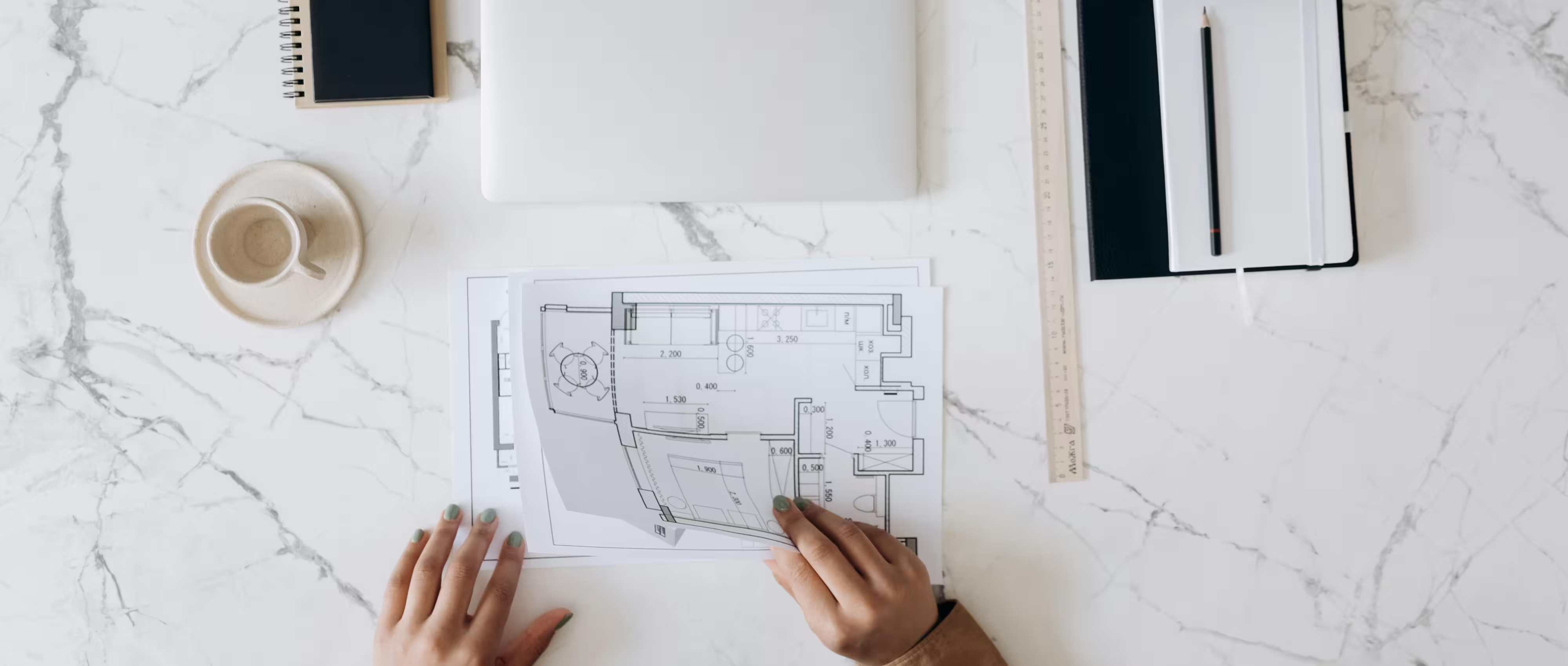
When people look at architectural drawings, they tend to focus on the big moves — the form, the layout, the size of the spaces. What often goes unnoticed are the small decisions layered quietly into the documentation. These details rarely make it into glossy renders, but they are the difference between a building that merely looks good and one that performs, lasts, and feels resolved.
At ISA™, we’ve learned that it’s usually the smallest details that create the biggest impact on how a project is built and experienced. And more often than not, they’re hiding in plain sight within the drawings.
A detail is not an embellishment. It’s a decision. It determines how materials meet, how water is managed, how tolerances are handled, and how a building ages over time. Miss one detail, and the consequences can ripple through construction, cost, and longevity.
Builders rely on details to make hundreds of decisions on site. When drawings are vague or unresolved, those decisions are made under pressure — often prioritising speed and simplicity over intent. That’s how good ideas get diluted long before the project is complete.
Consider something as simple as where a wall meets the floor. On paper, it’s a line. In reality, it’s a junction that must account for structure, finishes, movement, and durability. Get it right, and the space feels clean and deliberate. Get it wrong, and you end up with cracks, shadow gaps that don’t align, or finishes that deteriorate prematurely.
These are the moments that separate considered architecture from generic construction. They’re rarely celebrated, but they’re always felt.
Many clients assume details are about aesthetics. In reality, they’re often about reducing risk. Clear detailing eliminates guesswork, minimises variations, and prevents costly rework during construction.
When we document a project, we’re not just drawing how it should look — we’re stress-testing how it will be built. That means thinking through sequencing, tolerances, and interfaces between trades long before anyone steps on site.
One poorly resolved detail might seem insignificant. But multiply that by dozens — across façades, interiors, and services — and the impact compounds quickly. Costs rise, timelines slip, and the original intent becomes harder to recognise.
Conversely, when details are resolved early and documented clearly, construction becomes smoother. Builders spend less time asking questions and more time executing with confidence. The end result is calmer, more predictable, and far closer to what was promised.
Social media rewards bold visuals, not quiet competence. The details that truly matter are often invisible unless you know where to look. They don’t photograph well, but they define how a building performs years after the cameras are gone.
At ISA™, we design for the long term. That means prioritising clarity, durability, and buildability — even when it’s not the most glamorous part of the process.
Junctions between materials, waterproofing transitions, and build-up tolerances are often underestimated. These areas demand precise documentation to avoid issues during construction.
Builders can resolve details, but when they do so without design intent, decisions are driven by time and cost pressures. Clear documentation ensures those decisions align with the original vision.
Detailed drawings may require more effort upfront, but they typically reduce overall costs by minimising variations, delays, and rework during construction.
Critical details should be considered early and refined progressively. Waiting until construction has started is usually too late.
It means fewer surprises, clearer expectations, and a finished building that looks and performs the way it was intended to from day one.
Architecture isn’t just defined by bold gestures or impressive floor plans. It’s defined by the quiet decisions embedded in the drawings — the ones most people never notice, but everyone lives with.
At ISA™, we believe one well-considered detail can change the entire outcome of a project. Because in the end, it’s not the drawings you admire that matter most — it’s the details you never realise were there.

Copyright © 2026 ISA™. All Rights Reserved.