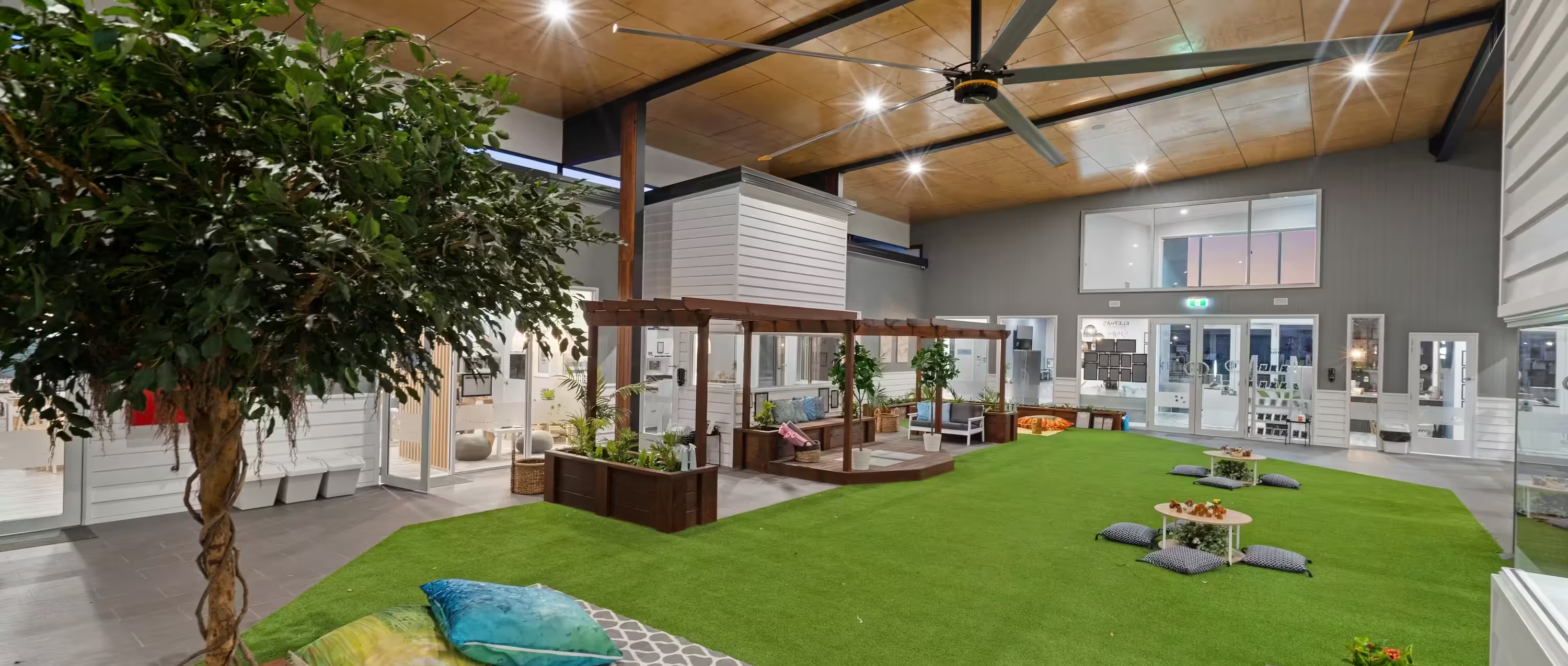
Engaging an architect is one of the earliest and most important decisions in the development of a childcare centre. The right architectural team helps guide the project through feasibility, planning, design coordination and construction while ensuring the centre functions effectively for children, educators and operators.
Childcare projects are significantly more complex than many people expect. They involve strict planning controls, operational requirements, supervision considerations and regulatory obligations that must all work together within a single environment.
At ISA™, childcare centre projects are delivered through ISO 9001, ISO 45001 and ISO 14001 certified systems, ensuring quality management, safety integration and environmentally responsible processes from concept through to completion.
One of the biggest mistakes in childcare development is waiting too long to involve an architect.
Early engagement allows the site to be tested for feasibility before commitments are made to acquisition, leasing or approvals.
This helps identify planning constraints, access limitations, outdoor play requirements and operational challenges before they become expensive problems later in the process.
Before design begins, it is important to establish the goals of the project.
This includes the intended centre size, operational model, staffing considerations, desired age groups and long-term objectives for the development.
A clear brief helps the architect align the design with both regulatory requirements and operational expectations.
Childcare centres involve highly specialised design requirements that differ significantly from residential or general commercial projects.
Effective childcare design requires an understanding of supervision sightlines, indoor-outdoor flow, staff circulation, acoustics and regulatory compliance.
When selecting an architect, it is important to assess their experience in delivering projects within the early learning sector.
Architectural involvement can extend well beyond concept design.
Depending on the agreement, services may include feasibility studies, planning approvals, consultant coordination, detailed documentation and construction phase involvement.
Understanding the full scope early helps establish clear expectations for both the client and project team.
Childcare projects require coordination between multiple disciplines, including town planning, civil engineering, hydraulic services, landscaping and certifiers.
Poor coordination between consultants can create approval delays, design conflicts and construction issues.
ISA™ uses ISO-certified systems to manage project coordination and maintain consistency throughout each project stage.
Clear documentation is essential for successful project delivery.
Incomplete or ambiguous drawings can lead to pricing inconsistencies, site variations and operational compromises during construction.
High-quality documentation helps ensure the centre is delivered as intended while reducing uncertainty across the project team.
Architectural involvement during construction helps maintain alignment between the design intent and the built outcome.
This may include site inspections, responding to contractor queries and reviewing construction details.
Continued oversight can reduce the likelihood of decisions being made on site that compromise operational functionality or compliance.
Successful childcare projects rely on clear communication between all stakeholders.
The architect should be able to explain design decisions, approval pathways and project risks in a clear and professional manner.
Transparent communication supports informed decision-making throughout the development process.
Childcare centres must comply with planning schemes, building regulations and early learning requirements.
However, successful projects go beyond minimum compliance by creating environments that genuinely support children, educators and families.
A strong architectural approach balances compliance with operational and spatial quality.
Architects operate under professional obligations that require accurate advice, responsible documentation and compliance with legislative requirements.
This professional accountability provides clients with greater confidence throughout the project lifecycle.
ISA™ reinforces these obligations through ISO-aligned systems focused on quality assurance, safety and structured project delivery.
Ideally before purchasing or committing to a site so feasibility can be assessed early.
Because it involves unique operational, supervision and compliance requirements specific to early learning environments.
Services may include feasibility, concept design, approvals, documentation and construction phase involvement.
Clear documentation improves coordination, pricing consistency and construction outcomes.
Through architect-led processes supported by ISO-certified systems focused on quality, safety and operational functionality.
Engaging the right architect early can significantly influence the success of a childcare centre project. From feasibility through to construction, architectural involvement helps align compliance, functionality and operational performance within a single coordinated process.
The most successful childcare centres are not simply compliant buildings — they are carefully planned environments designed to support children, educators and long-term operational success.

Copyright © 2026 ISA™. All Rights Reserved.