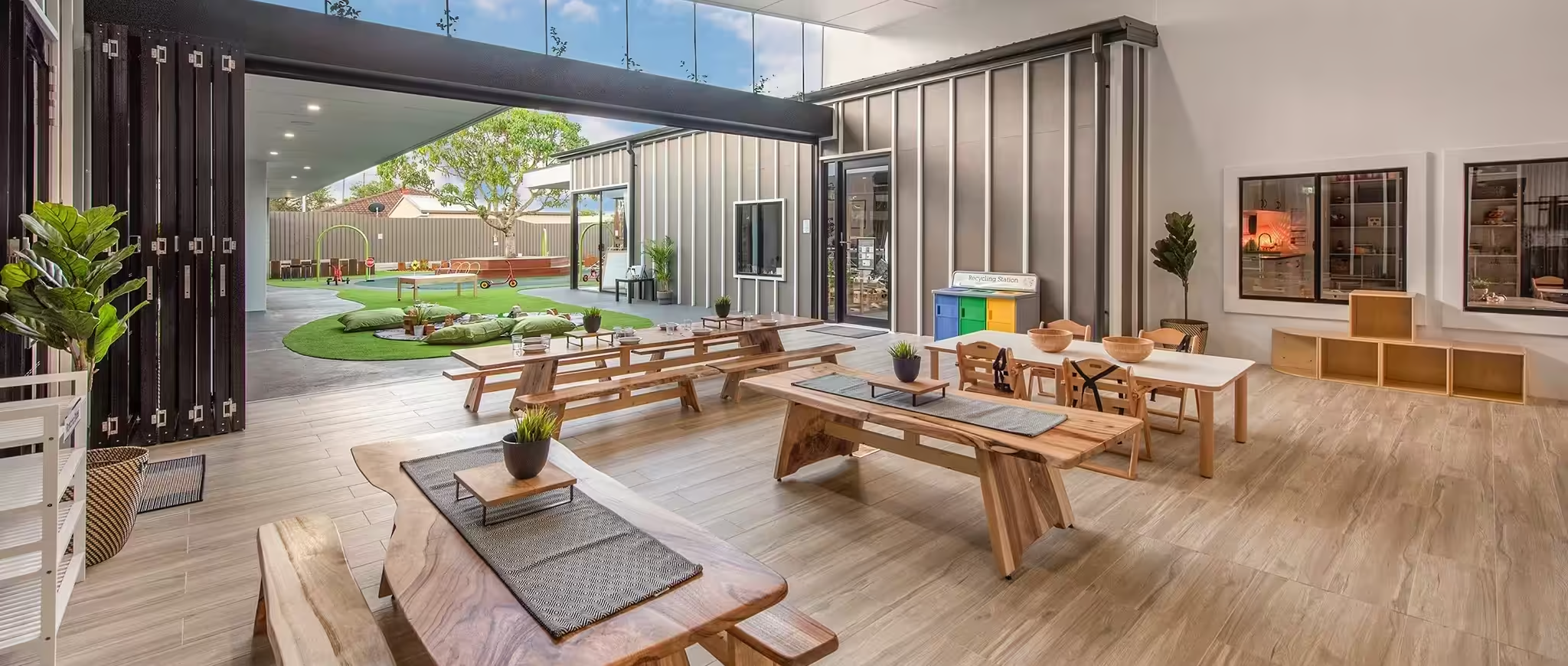
Mackay continues to attract residential growth, investment and community development across a number of established and emerging suburbs. As families move into new housing areas and population patterns evolve, demand for childcare services remains an important consideration for developers and operators assessing new opportunities.
However, successful childcare developments are not simply the result of strong demographics. Site selection, planning strategy, operational functionality and design quality all play critical roles in determining whether a centre performs effectively over the long term.
At ISA™, our childcare centre projects are guided by ISO 9001, ISO 45001 and ISO 14001 certified systems, helping ensure quality management, safety integration and environmentally responsible project delivery throughout the design and construction process.
Every regional market has unique characteristics that influence childcare development opportunities. Mackay is no exception.
While population growth and residential expansion may indicate potential demand, developers must also consider local planning requirements, transport networks, surrounding land uses and the availability of suitable development sites.
A comprehensive feasibility assessment helps determine whether a site can realistically support a successful childcare centre before substantial investment decisions are made.
Many challenges encountered during approvals and design can be traced back to site selection decisions made early in the project.
Sites may appear attractive due to location or purchase price but contain constraints that significantly affect development outcomes. Access limitations, irregular site geometry, easements, infrastructure constraints and planning overlays can all influence what can ultimately be achieved.
Careful evaluation before acquisition can help identify these issues while there is still flexibility to pursue alternative opportunities.
Childcare centres must navigate a range of planning and development requirements that can vary depending on the site and local planning framework.
Zoning, overlays, setbacks, landscaping expectations and operational considerations can all affect development outcomes. Understanding these requirements early helps establish realistic project expectations and informs the design strategy.
Early planning investigations often reduce the likelihood of significant redesign during later project stages.
One of the most important aspects of childcare centre design is managing the daily movement of vehicles.
Parents, staff, visitors and service providers all contribute to site activity throughout the day. Safe and efficient drop-off and pick-up operations are essential to both user experience and operational performance.
Sites with constrained access arrangements or limited circulation opportunities often require more detailed investigation before development proceeds.
Outdoor environments are among the most valuable spaces within a childcare centre.
Successful centres integrate outdoor play areas into the overall design strategy rather than treating them as leftover spaces after the building footprint has been established.
Supervision, accessibility, shade opportunities, circulation and indoor-outdoor connections all influence the effectiveness of these environments and should be considered from the earliest planning stages.
Childcare centres are operational businesses that must function efficiently every day.
Staff circulation, storage requirements, room adjacencies, supervision sightlines and parent movement patterns all influence the daily experience of both educators and families.
Design decisions that appear minor during planning can have significant long-term operational consequences once the centre begins operating.
Not every childcare centre is built on a perfectly flat site.
Sloping land can introduce opportunities and challenges that affect accessibility, circulation, retaining requirements and stormwater management.
Understanding site levels early helps inform building placement and ensures potential constraints are incorporated into the design process from the outset.
Childcare developments typically require input from planners, traffic engineers, certifiers, hydraulic consultants, civil engineers and landscape designers.
Effective coordination between these disciplines helps ensure project decisions remain aligned throughout feasibility, approvals and delivery.
ISA™ applies ISO-certified project coordination systems that support consistency, communication and quality throughout the development process.
Meeting planning and building requirements is essential, but compliance alone does not create a successful childcare centre.
The most effective facilities support children, educators and operators through thoughtful spatial planning and long-term operational functionality.
Centres designed solely around minimum requirements often miss opportunities to improve efficiency, usability and overall project performance.
Engaging an architect during feasibility rather than after land acquisition provides valuable insights into site suitability and development potential.
Early involvement allows planning constraints, operational requirements and design opportunities to be assessed before major commitments are made.
This approach supports better decision-making and establishes a stronger foundation for approvals, design development and construction delivery.
Many parts of Mackay continue to experience residential growth and family demand, making childcare development opportunities worth investigating through detailed feasibility studies.
Developers should assess zoning, overlays, access arrangements, site dimensions, servicing infrastructure and local planning requirements before committing to a site.
Safe and efficient drop-off and pick-up operations are critical to daily functionality and often influence the overall site layout.
Yes. Outdoor play environments are a core component of childcare design and should be planned from the earliest stages of development.
Early architectural involvement helps identify opportunities, constraints and approval considerations before major commitments are made.
Successful childcare centre development in Mackay requires more than identifying a site with favourable demographics. Planning requirements, operational functionality, access arrangements and design quality all contribute to long-term project success.
By approaching feasibility, planning and design as an integrated process, developers can make more informed decisions and create childcare environments that support children, educators and operators for years to come.

Copyright © 2026 ISA™. All Rights Reserved.