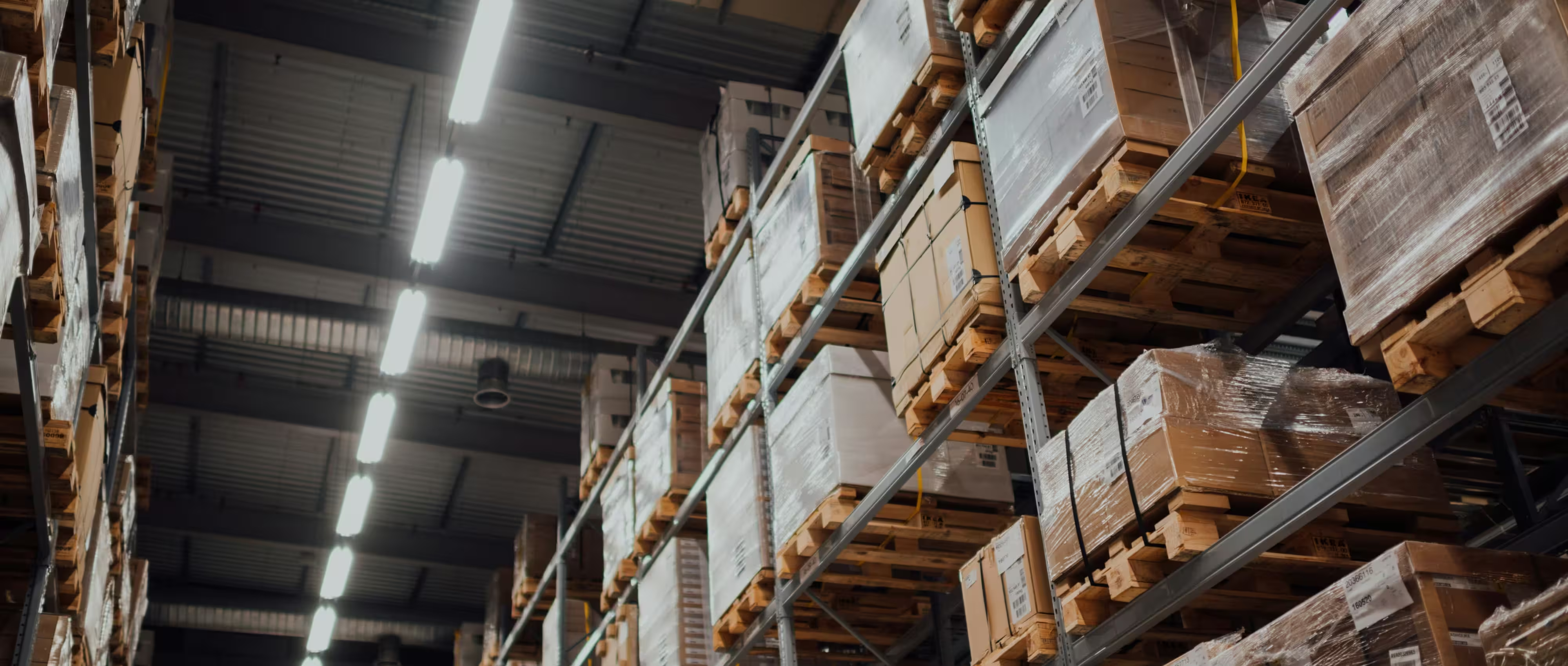
Warehouses are no longer just large storage boxes. In modern supply chains, they are highly engineered environments where efficiency, safety, logistics flow and scalability all intersect.
In Brisbane’s growing industrial corridors, demand for smarter warehouse design is increasing as operators look to reduce handling time, improve storage density and future-proof their facilities.
A warehouse architect is responsible for designing industrial facilities that balance operational efficiency with structural and regulatory requirements.
This includes planning loading docks, racking layouts, forklift circulation, office integration, amenities and future expansion potential.
Unlike standard building design, warehouse architecture is deeply driven by logistics and workflow performance.
The most efficient warehouses are designed around movement. Every metre of travel distance impacts productivity.
Good design reduces unnecessary handling, separates conflicting vehicle paths and ensures goods move logically from receiving to dispatch.
Poorly designed facilities often create bottlenecks at loading docks, inefficient racking layouts and wasted floor area.
Industrial land in Brisbane is increasingly valuable, making efficient use of site area critical.
Warehouse design must consider building footprint, hardstand areas, truck turning radii and future expansion opportunities.
A well-planned facility maximises usable storage while maintaining safe and functional circulation zones.
Loading docks are one of the most critical functional elements in any warehouse.
Their positioning, number and configuration directly affect turnaround times and operational efficiency.
Poor dock design can lead to congestion, delays and safety risks during peak operations.
Warehouses often require large clear spans to maximise unobstructed storage and movement space.
Structural systems must balance cost efficiency with functional requirements such as racking heights and equipment access.
Early coordination between architecture and engineering is essential to achieve optimal outcomes.
Modern warehouses often include integrated office spaces for administration, logistics coordination and staff operations.
These spaces must be carefully positioned to maintain separation from industrial activity while remaining functionally connected.
Good design improves visibility, communication and operational control across the facility.
Industrial facilities must comply with strict workplace health and safety requirements, including fire separation, evacuation routes and safe circulation paths.
Forklift traffic, pedestrian zones and loading areas must be clearly defined and separated to reduce risk.
ISA™ integrates safety considerations early in the design process, supported by ISO 45001 systems focused on occupational health and safety.
Warehouses are long-term assets, and design decisions made early can significantly impact future adaptability.
Allowing for expansion, increased automation and changing logistics requirements ensures the facility remains functional over time.
Flexible structural grids and scalable layouts are key strategies for future-proofing industrial design.
Warehouse projects rely heavily on coordination between architects, structural engineers, civil engineers and traffic consultants.
Each discipline contributes to ensuring the facility functions efficiently and meets compliance requirements.
Poor coordination can result in inefficiencies, redesigns and costly construction delays.
Clear documentation is essential for translating complex industrial requirements into buildable outcomes.
Detailed drawings reduce ambiguity on site and help ensure construction aligns with operational intent.
ISA™ applies structured ISO-certified processes to maintain consistency and clarity throughout documentation stages.
They design industrial facilities focused on logistics flow, efficiency, safety and compliance.
It directly impacts operational efficiency, safety and long-term scalability.
Yes. Poor layouts increase travel distances, congestion and handling time.
Both are essential. Architects focus on spatial and operational design while engineers ensure structural integrity.
Through coordinated industrial design, structured documentation and ISO-certified quality, safety and environmental systems.
Warehouse architecture is about far more than building large spaces. It is about creating efficient, safe and adaptable environments that support complex industrial operations.
When designed properly, a warehouse becomes a strategic asset — improving productivity, reducing costs and supporting long-term growth.

Copyright © 2026 ISA™. All Rights Reserved.