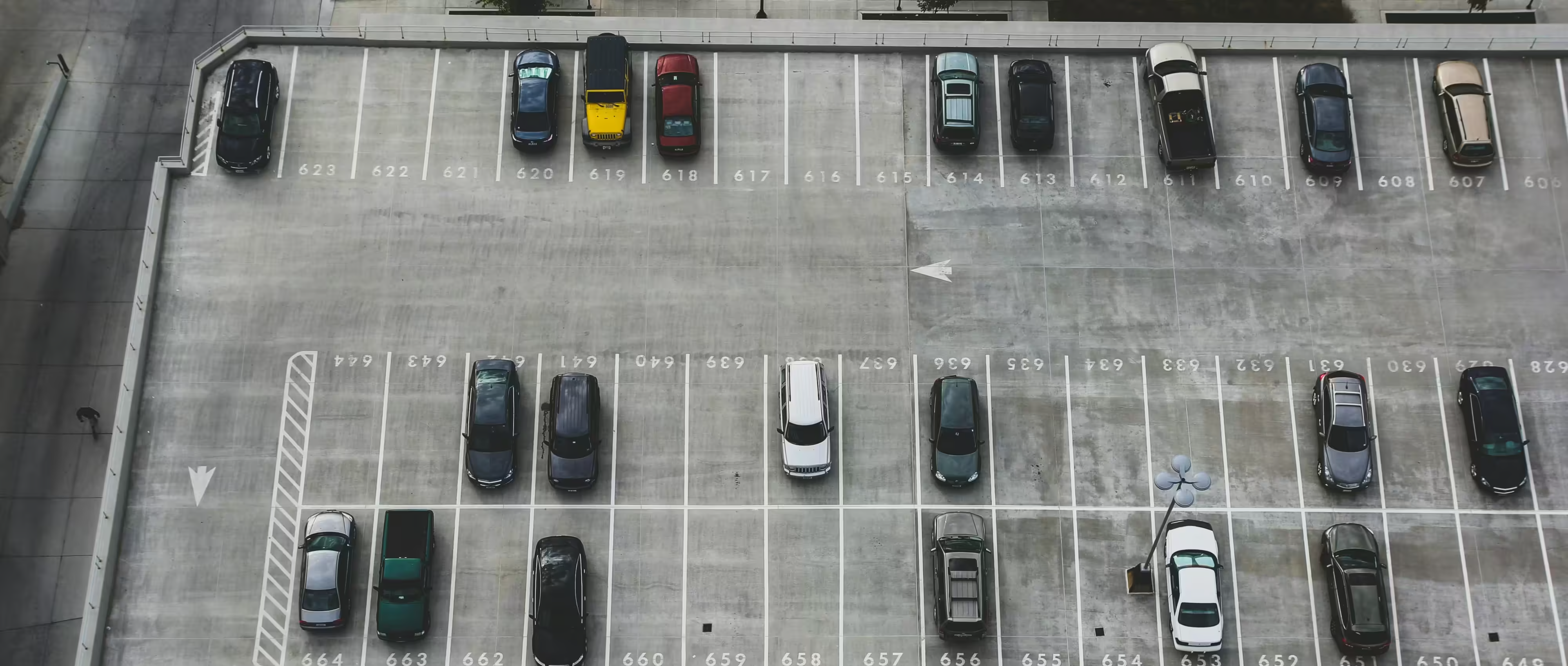
Car parking is a fundamental component of shopping centre design in South East Queensland. Parking provision affects accessibility, tenant performance and compliance with local planning schemes.
Understanding how parking ratios are calculated — and how they vary between councils — is critical for successful project planning.
Parking ratios define the number of car spaces required per square metre of gross floor area or per tenancy type.
These ratios are typically set by local planning schemes and may vary depending on land use, centre size and location.
Different councils across SEQ apply different parking requirements. Urban centres with strong public transport access may allow reduced parking, while suburban locations often require higher provision.
Understanding these local variations is essential during feasibility and planning stages.
Not all tenancies generate the same parking demand. Supermarkets, food outlets and specialty retail each have different usage patterns.
Effective planning considers the tenancy mix to ensure parking supply aligns with real-world usage.
Beyond numbers, the efficiency of parking layout is critical. Poorly designed car parks can create congestion and reduce usability.
Circulation, entry points and pedestrian safety must all be considered alongside compliance requirements.
While meeting minimum parking ratios is required, over-provision can reduce site efficiency and increase construction costs.
The goal is to balance regulatory compliance with practical functionality and long-term performance.
No. Each local authority sets its own requirements.
In some cases, subject to planning approval and supporting justification.
Tenancy mix, location and accessibility all play a role.
No. Over-supplying parking can reduce site efficiency.
Through coordinated planning, compliance review and efficient layout strategies.
Parking design is both a compliance requirement and a key contributor to how a shopping centre functions.
When approached strategically, it supports accessibility, tenant success and long-term viability.

Copyright © 2026 ISA™. All Rights Reserved.