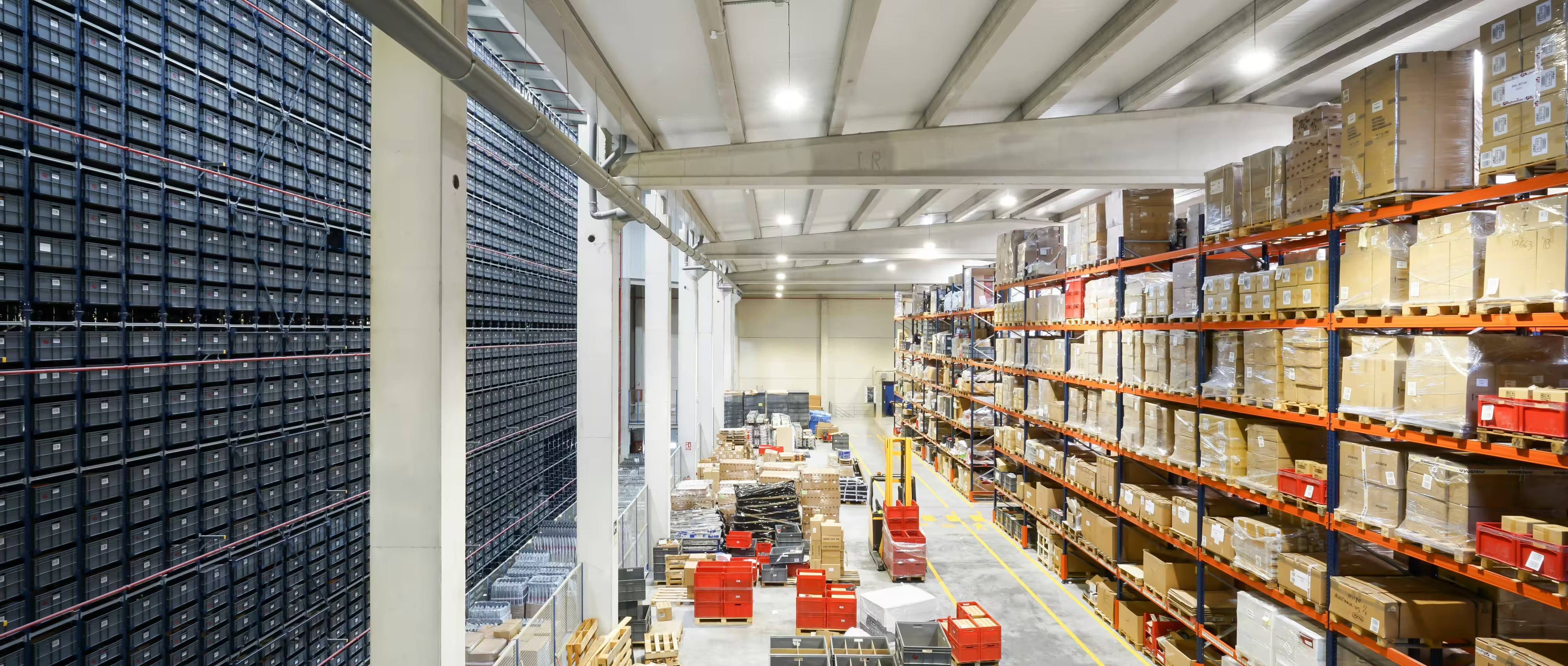
Developing industrial land for warehousing is a complex process that involves planning controls, site constraints, logistics requirements and construction feasibility. Without the right guidance, these factors can quickly turn a viable site into an inefficient or unworkable development.
A warehouse design consultant bridges the gap between land potential and built reality — ensuring industrial sites are designed to perform efficiently, comply with regulations and support long-term operational use.
A warehouse design consultant evaluates land and develops layouts that optimise industrial performance while meeting planning and construction requirements.
This includes assessing site access, building envelopes, truck movement, loading requirements and future expansion potential.
The goal is to unlock the full potential of industrial land while avoiding costly inefficiencies.
One of the most important stages in industrial development is feasibility analysis. This determines what can realistically be built on a site before detailed design begins.
Factors such as zoning, setbacks, easements, flood risk and access constraints all influence what is achievable.
Early feasibility work helps prevent designs that look good on paper but fail in approval or construction stages.
Industrial land is rarely a blank slate. Every site comes with constraints that must be carefully integrated into the design.
A consultant translates these constraints into practical layouts that accommodate warehouses, hardstand areas, parking, and vehicle circulation.
Good design ensures that no part of the site is wasted while maintaining safe and efficient operations.
One of the most critical components of warehouse development is vehicle movement.
Truck access, turning radii, loading docks and queuing areas must be designed to support peak operational demand.
Poorly planned logistics layouts can lead to congestion, safety risks and reduced efficiency.
The positioning of the warehouse on a site has a direct impact on efficiency and future flexibility.
Considerations include solar orientation, expansion potential, fire separation and integration with external circulation.
A well-positioned building maximises usable land while supporting operational flow.
Industrial developments must comply with local planning schemes, which regulate land use, building height, setbacks and environmental impacts.
Each council may interpret requirements differently, making local knowledge essential.
Early alignment with planning controls reduces risk of redesign and approval delays.
Industrial sites require coordination of essential services such as stormwater, power supply, water, sewer and telecommunications.
These systems must be integrated into the site layout without compromising operational efficiency.
Poor coordination can significantly increase construction complexity and cost.
Industrial facilities often evolve over time as businesses grow or operational needs change.
Designing with future expansion in mind ensures the site remains functional and valuable long-term.
This may include reserving expansion zones or designing modular building footprints.
Industrial projects require collaboration between architects, engineers, traffic consultants and planners.
A warehouse design consultant ensures all disciplines are aligned and working toward a cohesive outcome.
This reduces conflicts, avoids redesign and improves overall project efficiency.
Clear documentation is essential in industrial development, where small design decisions can have large operational impacts.
Accurate drawings help ensure construction aligns with intended logistics and compliance outcomes.
ISA™ applies ISO-certified processes to maintain consistency and clarity across all project stages.
Warehouse design must prioritise safety, particularly where vehicles and pedestrians operate in the same environment.
Clear separation of movement paths, visibility and loading zones reduces risk and improves efficiency.
ISA™ integrates safety considerations aligned with ISO 45001 principles throughout the design process.
They plan and coordinate industrial layouts to maximise site efficiency, compliance and operational performance.
It identifies site constraints before design progresses, reducing risk of redesign later.
Not always. Zoning, overlays and physical constraints can limit development potential.
Logistics flow, truck access, site shape, planning controls and service infrastructure.
Through structured ISO-certified processes, coordinated design and feasibility-led planning.
Industrial land development is most successful when complexity is addressed early and systematically.
A warehouse design consultant helps translate raw land into functional, efficient and compliant industrial facilities that support long-term operational success.

Copyright © 2026 ISA™. All Rights Reserved.