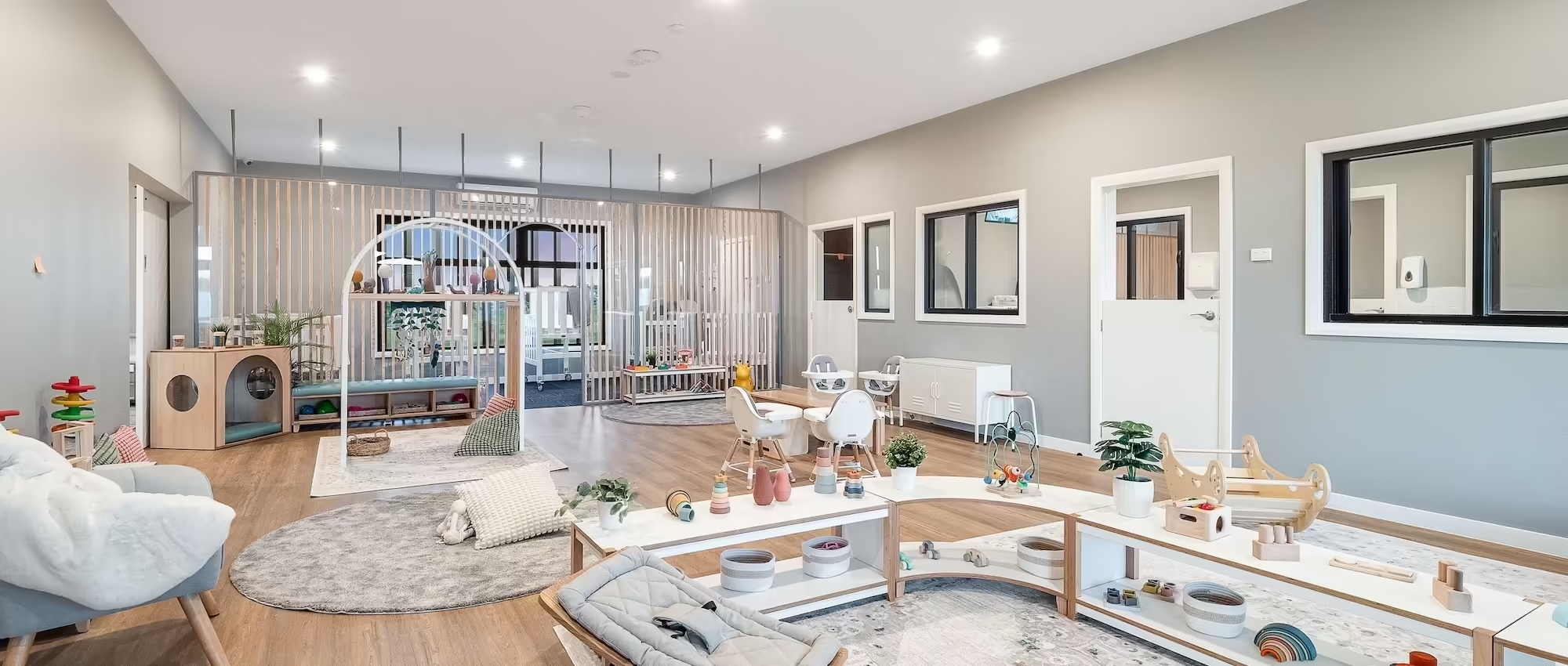
Choosing the right architect for a childcare centre project is one of the most important decisions in the entire development process. Childcare environments involve far more than creating attractive spaces — they must support supervision, operational efficiency, compliance and long-term functionality for educators, children and operators alike.
In Brisbane, childcare projects also require careful navigation of planning controls, outdoor play requirements, traffic considerations and building regulations. The right design partner helps coordinate these complexities from feasibility through to construction.
Childcare centres are highly specialised building types with operational and regulatory requirements that differ significantly from standard commercial projects.
Effective childcare design requires careful consideration of supervision sightlines, indoor-outdoor relationships, staff circulation, acoustic management and outdoor play functionality.
A design partner with sector-specific experience is better equipped to resolve these requirements in an integrated and practical way.
One of the biggest advantages of working with an architect early is the ability to assess feasibility before significant commitments are made.
Site dimensions, planning overlays, access conditions and operational constraints can all affect whether a childcare centre is viable on a particular property.
Early architectural involvement helps identify risks and opportunities before the project progresses too far.
Attractive imagery alone does not determine whether a childcare centre will function effectively in practice.
When evaluating architects, it is important to understand how they approach planning, supervision, circulation and operational functionality — not just visual outcomes.
Successful childcare centres balance aesthetics with practical performance for educators, families and children.
Childcare developments in Brisbane are influenced by planning schemes, traffic requirements, landscaping expectations and building regulations.
A knowledgeable design partner understands how these requirements affect site planning, approvals and overall project viability.
Early compliance integration helps reduce approval delays and redesign during assessment.
Childcare projects require coordination between multiple consultants, including town planners, traffic engineers, hydraulic consultants, certifiers and landscape designers.
Poor coordination can result in conflicting documentation, approval delays and construction issues.
ISA™ uses ISO-certified coordination systems to maintain clarity and consistency across all project stages.
Detailed documentation is essential for successful childcare delivery.
Incomplete drawings or unresolved details can create pricing inconsistencies, construction delays and operational compromises during delivery.
Clear and coordinated documentation helps ensure the built outcome aligns with the original design intent.
The role of the architect should not necessarily end when approvals are achieved.
Ongoing involvement during construction helps maintain alignment between the documentation and the final built result.
This may include reviewing contractor queries, conducting site inspections and resolving issues as they emerge during construction.
Childcare developments involve numerous stakeholders, including operators, consultants, builders and approval authorities.
Effective communication helps ensure everyone remains aligned throughout the process.
A strong design partner should be able to explain risks, approval pathways and project implications clearly and professionally.
Childcare centres are long-term operational environments that must perform consistently every day.
Design decisions should prioritise durability, supervision, circulation and operational efficiency rather than short-term visual trends alone.
Well-planned centres are easier to manage, adapt and maintain over time.
Architects operate under professional obligations requiring accurate advice, responsible documentation and compliance with legislative requirements.
These obligations support greater accountability throughout the design and construction process.
ISA™ reinforces these responsibilities through ISO-aligned systems focused on quality assurance, safety and coordinated project delivery.
Because childcare centres require careful consideration of supervision, compliance, operational flow and child-focused spatial planning.
Ideally during the feasibility stage before committing to a site or approvals pathway.
Relevant project experience, coordination capability, strong documentation processes and understanding of operational requirements.
Clear documentation improves coordination, reduces construction issues and supports smoother project delivery.
Through architect-led processes supported by ISO-certified systems focused on quality, safety and long-term operational functionality.
Choosing the right childcare architect in Brisbane is about far more than selecting a design style. It is about partnering with a team capable of coordinating complex requirements while creating environments that genuinely support children, educators and operators.
With the right planning, documentation and oversight, childcare centres can achieve both operational efficiency and long-term value through thoughtful architectural design.

Copyright © 2026 ISA™. All Rights Reserved.