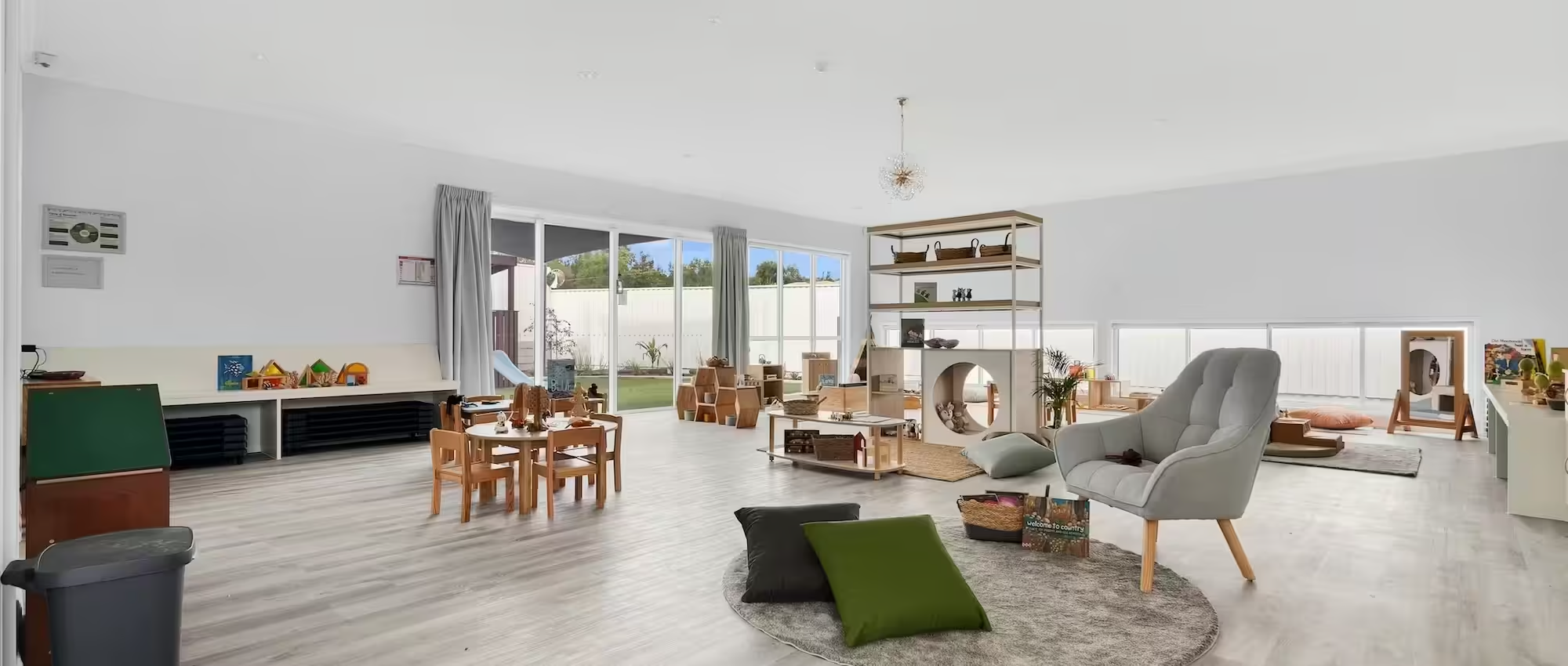
When people think about childcare design, they often focus on colourful classrooms, outdoor play areas and compliance requirements. But the real performance of a centre is shaped by quieter forces — light, sound and physical comfort. These elements rarely feature in marketing brochures, yet they dramatically influence how children learn and how educators cope with long days.
At ISA™, we treat lighting, acoustics and thermal comfort as foundational design layers rather than afterthoughts. When these systems are resolved early, the entire environment feels calmer, healthier and more supportive of early learning.
Access to daylight improves mood, supports circadian rhythms and enhances concentration. But simply adding large windows isn’t enough. Without careful orientation and shading, excessive glare and heat gain can create discomfort and distraction.
Thoughtful natural light design considers window placement, ceiling heights, overhangs and internal reflectivity. Light should be even and soft, not harsh. It should reach deep into rooms while maintaining thermal efficiency.
In childcare environments, balanced daylight helps regulate energy levels and creates spaces that feel open and welcoming rather than artificial or overstimulating.
Not all activities happen during daylight hours. Artificial lighting must adapt to different tasks — from active play to quiet reading and rest periods. Uniform fluorescent grids often create flat, institutional atmospheres that do little to support comfort.
Layered lighting strategies allow flexibility. Softer ambient lighting can reduce overstimulation, while focused task lighting supports specific activities. Adjustable systems help educators modify the environment throughout the day.
Good lighting design quietly reinforces behaviour rather than fighting against it.
Childcare centres are inherently lively spaces. Without acoustic control, sound quickly becomes overwhelming. Hard floors, high ceilings and parallel walls amplify noise, leading to echo and constant background chatter.
Poor acoustics don’t just cause irritation. They increase fatigue for educators and reduce children’s ability to focus. Over time, excessive noise contributes to stress and communication difficulties.
Integrating acoustic panels, absorbent ceiling treatments and strategic zoning dramatically reduces reverberation. Even subtle interventions can transform the atmosphere from chaotic to calm.
Beyond materials, layout plays a critical role in acoustic performance. Separating high-energy areas from quiet learning zones prevents sound from spreading unchecked. Storage walls, joinery and transitional spaces can act as buffers between activity types.
This zoning strategy supports diverse learning styles within the same facility. Children who need movement and noise have space to thrive, while others can concentrate in calmer environments.
Acoustic comfort isn’t about silence — it’s about balance.
Temperature control and ventilation are often treated as purely mechanical considerations. In reality, they directly influence wellbeing and energy levels. Overheated or poorly ventilated rooms quickly become uncomfortable and distracting.
We consider passive strategies first — orientation, shading, insulation and cross-ventilation — before relying solely on mechanical systems. Fresh air, stable temperatures and controlled humidity levels contribute to a healthy home design approach adapted for educational settings.
Comfortable environments reduce irritability and help children remain engaged throughout the day.
Comfort also lives in the details children physically interact with. Floor finishes should feel warm underfoot. Seating should support posture. Materials should be durable yet inviting.
Soft textures, rounded edges and scaled joinery make spaces feel safe and approachable. When tactile comfort is prioritised, children are more likely to settle and engage with their surroundings.
These subtle design decisions accumulate into a centre that feels considered at every level.
The biggest mistake in childcare projects is addressing lighting, acoustics and comfort too late. Retrofitting acoustic panels or adding shading after construction is inefficient and often compromises aesthetics.
By integrating these elements into early planning, we ensure they work seamlessly with layout, structure and material choices. This approach protects both performance and visual clarity.
When invisible systems are handled thoughtfully, the building simply works better.
Natural light design supports mood, concentration and circadian rhythms, creating healthier and more engaging learning environments.
Excessive noise reduces focus, increases stress and makes communication difficult. Proper acoustic treatment improves clarity and calmness.
When planned early, acoustic solutions can be integrated efficiently. Retrofitting later is usually more costly and less effective.
Good air quality and temperature stability enhance comfort and reduce fatigue, supporting healthier learning environments.
From the concept stage. Early coordination ensures these systems are integrated rather than added as reactive fixes.
The most successful childcare centres aren’t defined solely by layout or colour. They succeed because they feel good to be in. Balanced light, controlled sound and physical comfort create environments where children can focus, explore and grow.
By prioritising these overlooked elements from the outset, we design centres that perform quietly but powerfully — supporting both learning outcomes and everyday wellbeing for years to come.

Copyright © 2026 ISA™. All Rights Reserved.