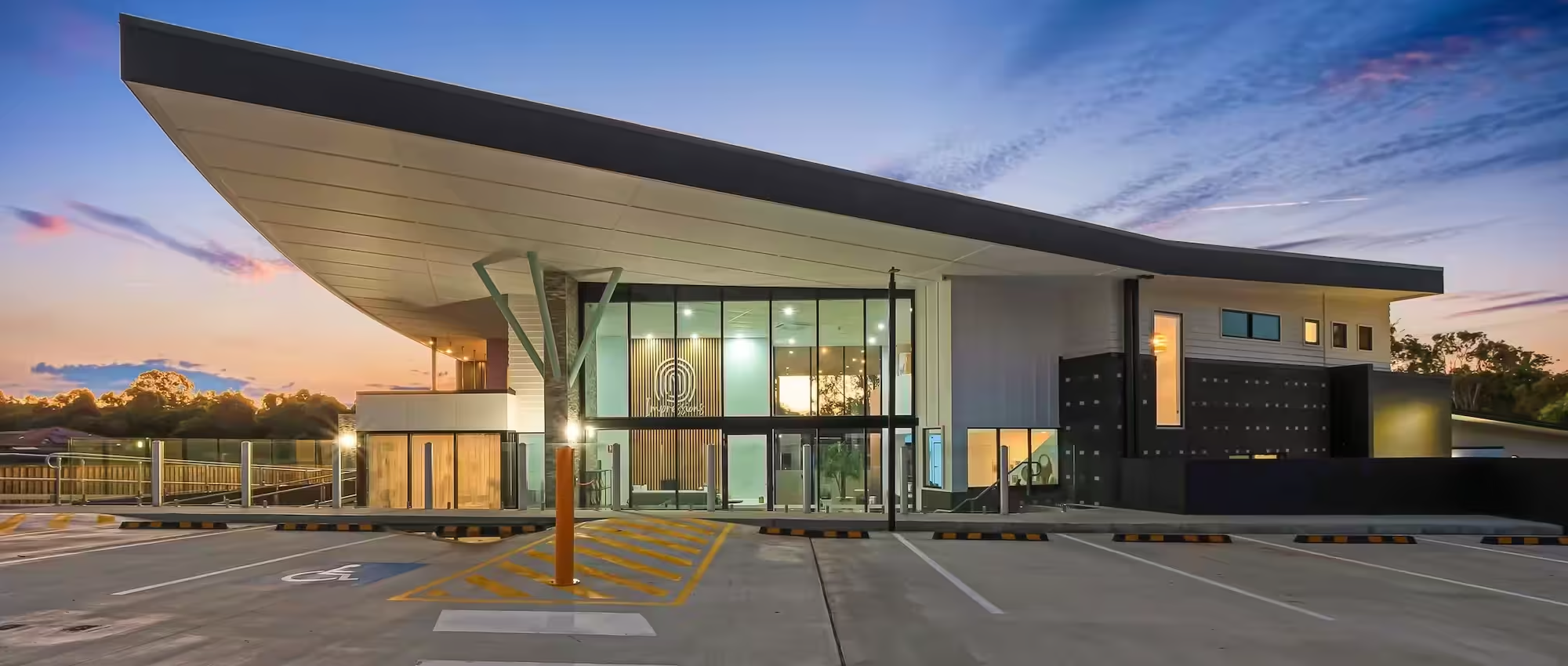
Before a meeting begins, before a product is seen, before a word is spoken — the entryway has already done its work.
In commercial architecture, entry spaces are often underestimated. Treated as circulation zones rather than strategic design moments, they’re frequently value-engineered or simplified. Yet the entryway is one of the most influential parts of any commercial building.
At ISA™, we see entryways as a form of silent communication. They tell people who you are, what you value, and what kind of experience they should expect — all within seconds.
Research consistently shows that people form impressions of spaces almost immediately. In commercial environments, that initial judgement influences trust, confidence, and perceived credibility.
Whether it’s an office, school, civic building, or place of worship, the entry sets the emotional tone. A cramped, confusing, or underwhelming arrival sends a very different message to one that feels deliberate, clear, and considered.
Importantly, this reaction happens before anyone consciously analyses the design. The space is felt before it is understood.
For commercial clients, the entry is often the most public-facing part of the building. It’s the architectural equivalent of a handshake.
A well-designed entry communicates professionalism, confidence, and intent. It reinforces brand values without relying on signage or graphics alone. Scale, material choice, proportion, and sequencing all play a role in shaping this perception.
When entry design is disconnected from brand identity, the result feels generic — even if the rest of the building is well resolved.
One of the most common failures in commercial entry design is lack of clarity. Users shouldn’t have to guess where to go, where to wait, or how to enter.
Good entry design intuitively guides people through hierarchy and alignment. Doors are obvious. Reception points are visible. Movement feels natural rather than forced.
When these cues are missing, frustration sets in quickly — and that frustration is often subconsciously transferred to the organisation itself.
The transition from outside to inside is one of the most important spatial moments in architecture. In commercial buildings, this threshold defines how people mentally shift from public to semi-private space.
Compression and release, changes in scale, shifts in material, and controlled sightlines all help mark this transition. Without them, entryways can feel abrupt or unresolved.
Thoughtful thresholds create a sense of arrival — not just access.
While entryways carry symbolic weight, they must also perform. They manage foot traffic, security, accessibility, and operational flow.
Poorly designed entries can create bottlenecks, privacy issues, or safety concerns. These problems rarely appear on renderings but become obvious in daily use.
At ISA™, entry design is tested against real-world scenarios — peak arrival times, after-hours access, visitor management — not just visual impact.
When entryways fail, the consequences extend beyond aesthetics. Confusing arrivals lead to inefficiencies. Poor visibility affects security. Weak presence diminishes perceived value.
Retrofitting entry spaces after construction is often expensive and disruptive. That’s why resolving these spaces early is critical.
Entryways are not the place to cut corners — they’re where investment is most visible.
We treat entryways as strategic architecture, not leftover space. They are designed alongside circulation, structure, and program — not after them.
This means aligning entry experience with purpose, testing usability early, and ensuring the built result matches the intent shown on drawings.
The goal is not to impress for the sake of it, but to create entry spaces that feel right, work hard, and stand the test of time.
They shape first impressions, influence user experience, and communicate brand values before any interaction occurs.
No. While appearance matters, functionality, clarity, and flow are just as critical to successful entry design.
Absolutely. Impact comes from proportion, sequencing, and intention — not size alone.
Treating them as leftover space rather than a primary architectural element.
As early as possible. Entryways influence layout, circulation, and structure, so they should be resolved alongside core planning.
In commercial architecture, entryways do more than let people in. They set expectations, establish trust, and frame the entire experience that follows.
When designed with intent, they become powerful tools — quietly reinforcing value long after the first impression has been made.

Copyright © 2026 ISA™. All Rights Reserved.