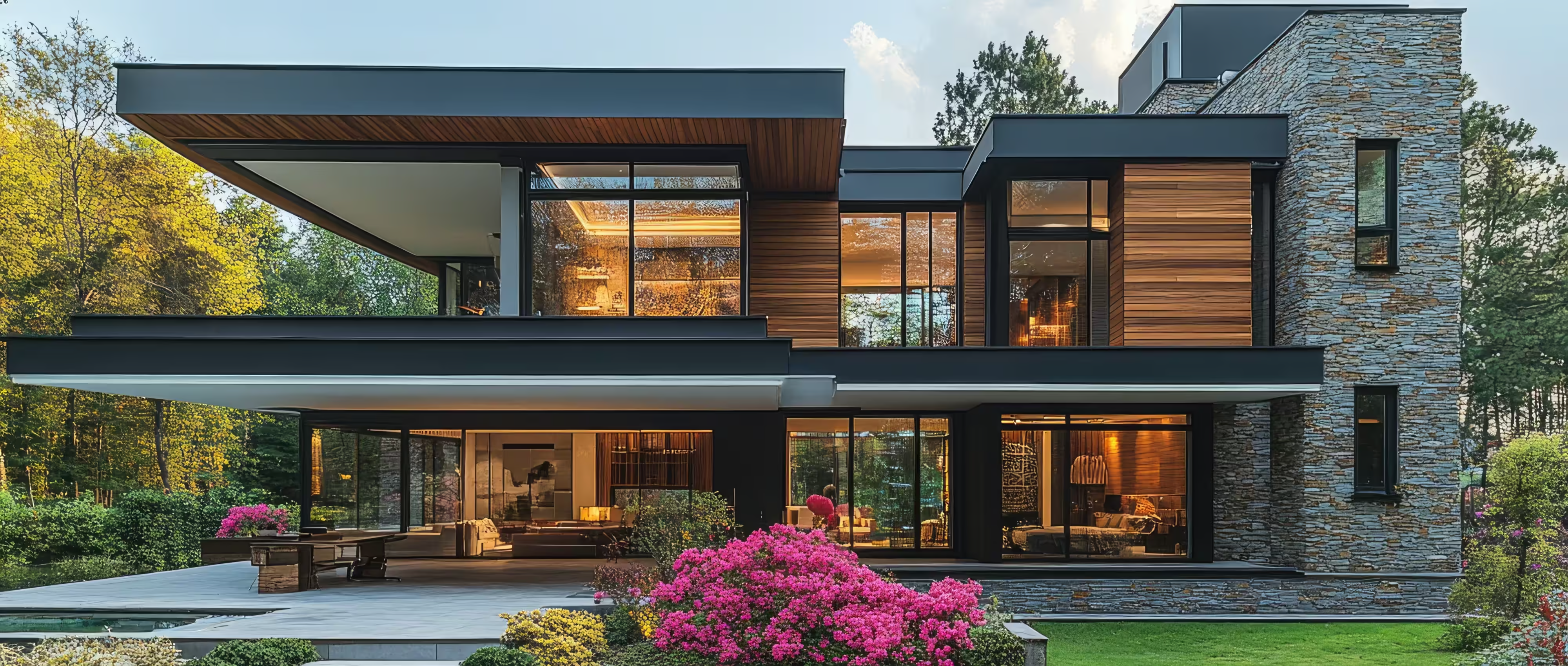
When budgets climb into the multi-million-dollar range, expectations shift. A $5M home is not just about size or postcode — it’s about execution, longevity, and depth of thinking. Yet surprisingly often, projects at this level still revolve around one dominant idea: the facade.
A striking exterior might turn heads, but architecture that stops at appearances quickly reveals its shortcomings. True value at this level comes from what lies beneath the surface — the planning, the detailing, and the decisions that shape how the home actually functions for decades to come.
Facades are easy to sell. They photograph well, they create instant impact, and they’re often the focus of early design conversations. But when the design effort is concentrated on the exterior alone, the internal experience is frequently compromised.
Circulation becomes awkward. Room proportions feel forced. Storage is an afterthought. Services are squeezed into places they don’t belong. These issues don’t show up in renders — they appear once you’re living in the home.
At the $5M level, architecture must work on multiple layers simultaneously. It’s not enough for spaces to look good; they must be intuitive, efficient, and adaptable to how life evolves over time.
This means carefully considered adjacencies, clear zoning between public and private areas, and a hierarchy of spaces that feels effortless rather than overdesigned. These qualities are invisible in isolation, but unmistakable when they’re missing.
Expensive homes often fail not because of budget constraints, but because of poor planning. Oversized rooms without purpose, excessive corridors, and redundant spaces inflate costs without improving the experience.
Thoughtful planning ensures every square metre earns its place. It aligns lifestyle needs with spatial logic, creating homes that feel generous without being wasteful and refined without being fragile.
At this level, details are not optional extras — they are the architecture. Junctions, thresholds, and transitions define how spaces feel and how they age.
Poorly resolved details lead to visual clutter, maintenance issues, and costly fixes down the line. Well-resolved details, on the other hand, create quiet confidence. Nothing feels accidental, and nothing draws attention for the wrong reasons.
Large budgets can create a false sense of security. Complex designs are often assumed to be buildable simply because the budget exists. In reality, unresolved designs increase risk, regardless of spend.
Architecture that respects construction realities protects both the design intent and the client’s investment. Clear documentation, realistic detailing, and coordination across disciplines are what ensure the finished home resembles the vision that was sold.
A $5M home should not feel dated in five years. Designs driven by short-term trends often age poorly, requiring updates long before they should.
Architecture with depth focuses on proportion, material integrity, and timeless planning principles. These homes don’t shout for attention — they remain relevant because they were never trying to be fashionable in the first place.
A facade matters, but it should be the outcome of good architecture — not the starting point. When planning and detailing are right, the exterior naturally follows.
Cost doesn’t guarantee quality. Without rigorous planning and documentation, even large budgets can produce inefficient and frustrating spaces.
Look beyond renders. Ask how the home works day to day, how spaces connect, and how decisions hold up over time — not just how they look.
Not necessarily. Good detailing often simplifies construction and use by resolving issues early rather than reacting to them later.
You end up paying premium prices for a home that only performs at a surface level — impressive to look at, but frustrating to live in.
A $5M home deserves more than visual impact. It deserves clarity, rigour, and architecture that works as hard as the investment behind it.
At ISA™, we believe the real measure of quality is not how a home photographs on day one, but how confidently it performs for years to come. Because when the facade fades into the background, what remains is the architecture — and that’s where true value lives.

Copyright © 2026 ISA™. All Rights Reserved.