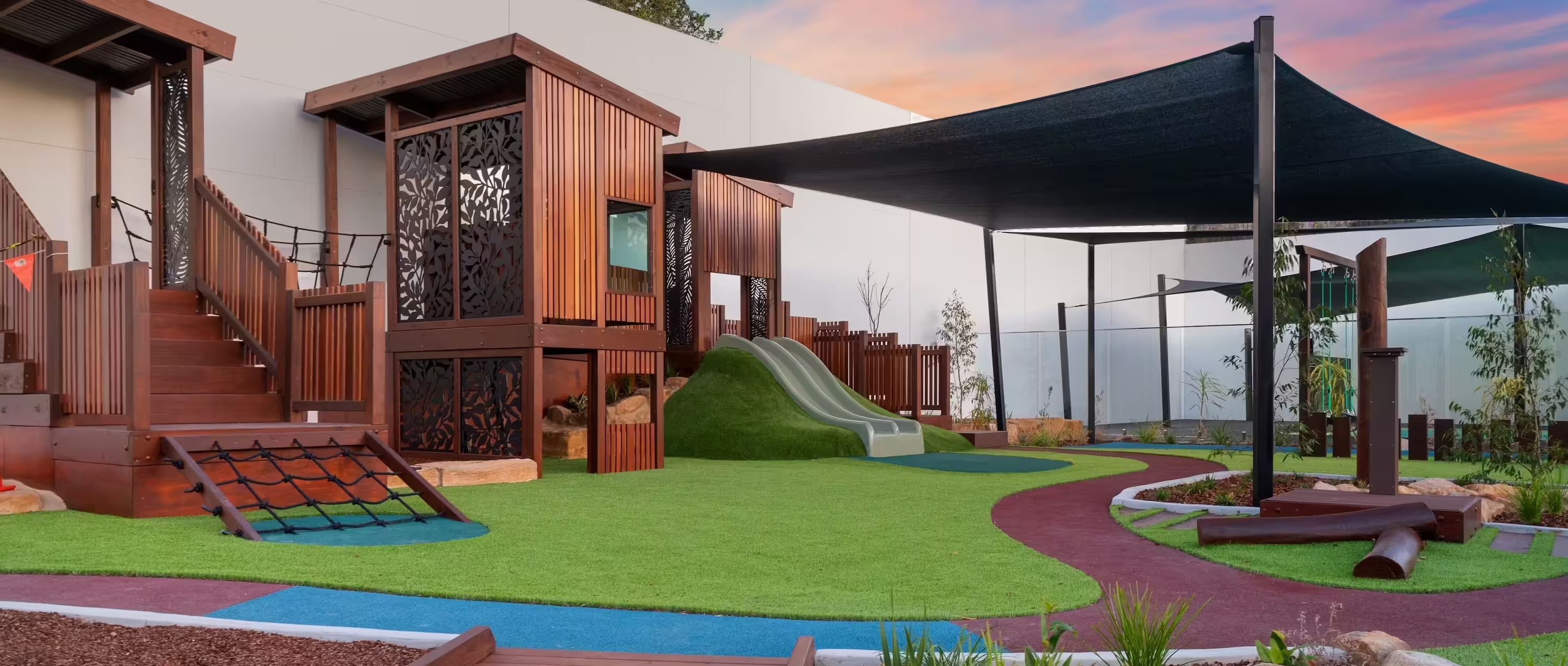
Great childcare design isn’t about squeezing classrooms into a compliant footprint. It’s about shaping environments that genuinely support how children grow, explore and learn. When spaces are planned with care, the building becomes an active participant in education rather than just a container for it.
The best centres feel intuitive. Children move confidently. Educators supervise effortlessly. Families feel welcome. Everything flows. Achieving that simplicity, however, requires deliberate planning, tested details and a deep understanding of how early learning environments actually operate day to day.
Over years of designing childcare projects across Queensland, we’ve learned that small architectural decisions can have an outsized impact on behaviour, safety and learning outcomes. These are the principles we return to again and again.
Young children don’t experience buildings the way adults do. They don’t move in straight lines or sit still for long periods. They explore, gather, retreat, run, build and imagine. Spaces that force rigid behaviour often create frustration and constant supervision challenges.
Good childcare design recognises that movement is learning. Rooms should allow circulation loops rather than dead ends. Activity zones should overlap gently instead of feeling boxed in. Clear sightlines should let educators supervise without hovering.
When planning reflects real behaviour, the environment feels calmer and more natural for everyone inside it.
Not all play is loud or high-energy. Children also need quieter spaces for reading, puzzles and small-group activities. Without clear zoning, everything happens everywhere — which usually means noise, distraction and overstimulation.
Thoughtful layouts create subtle boundaries between active and quiet areas. Changes in ceiling height, joinery, floor finishes or furniture placement can gently define zones without walls. This keeps spaces open and flexible while still supporting different learning styles.
The result is a centre that feels organised and balanced rather than chaotic.
Safety is non-negotiable in childcare settings, but heavy-handed solutions can make spaces feel restrictive or clinical. The challenge is achieving excellent visibility without turning the centre into something that feels overly controlled.
Strategic glazing, internal windows and open planning allow educators to monitor multiple areas at once. Carefully positioned storage and joinery maintain clear lines of sight while still creating cosy learning pockets for children.
When supervision is embedded in the design rather than added as an afterthought, spaces feel both secure and welcoming.
In childcare environments, furniture isn’t just furniture. Built-in elements often shape how the room functions more than the walls themselves. Joinery can define play zones, provide storage, create reading nooks and encourage independent exploration.
Integrated storage reduces clutter and keeps materials accessible to children at their scale. Low shelves double as spatial dividers. Window seats become quiet retreat spaces. These details support autonomy and help children take ownership of their environment.
When thoughtfully designed, these elements become some of the most loved parts of a centre.
Childcare centres work hard. Finishes must handle constant cleaning, spills and heavy daily use. But durability doesn’t mean the space has to feel cold or utilitarian.
Selecting robust materials with warmth and texture helps create environments that feel comfortable rather than institutional. The goal is longevity without sacrificing character. Children respond strongly to how a space feels, not just how it functions.
The most successful projects balance performance and atmosphere equally.
Outdoor play is essential in early learning, not an optional extra. Easy access to external areas encourages movement, supports diverse activities and gives educators greater flexibility throughout the day.
Covered transitions, direct exits from rooms and visual connections between inside and outside make outdoor areas feel like extensions of the classroom rather than separate destinations. This integration reduces bottlenecks and makes supervision simpler.
When indoor and outdoor spaces work together, the entire centre feels larger and more dynamic without increasing the footprint.
A childcare centre doesn’t just serve children. Educators need functional staff areas, clear storage and efficient back-of-house planning. Families need welcoming entry points and smooth daily routines at drop-off and pick-up.
Simple things like intuitive circulation, generous storage and well-positioned admin areas make a significant difference to how smoothly the centre operates. When staff workflows are considered from the beginning, the entire facility runs better.
Good design respects everyone who uses the building, not just one group.
Even the best concepts fail if they’re difficult or unrealistic to construct. Childcare projects often operate under tight budgets and timelines, so solutions must be practical as well as thoughtful.
At ISA™, we focus on details that are clear, durable and straightforward to build. This reduces variations, protects quality and ensures the finished centre matches the original intent rather than being watered down during construction.
Beautiful design only counts if it survives the build process.
Successful centres balance safety, supervision, flexibility and comfort. Spaces should support real behaviour, not force children and educators to adapt to rigid layouts.
Open planning can be very effective when paired with subtle zoning. The key is flexibility without noise or distraction overwhelming the environment.
Clear sightlines, internal glazing and thoughtful layout allow educators to monitor multiple areas simultaneously without feeling intrusive or restrictive.
Yes. Integrated joinery shapes behaviour, supports independence and keeps spaces organised, often having more impact than loose furniture alone.
From the very beginning. Early involvement ensures compliance, functionality and buildability are considered together rather than fixed later at extra cost.
Designing a great childcare centre isn’t about ticking regulatory boxes. It’s about creating places where children feel confident, educators feel supported and families feel welcome. When design genuinely serves the way people use a space, everything works better.
At ISA™, we approach every childcare project with that mindset. Because the environments children experience early on shape how they learn for years to come — and thoughtful design can make all the difference.

Copyright © 2026 ISA™. All Rights Reserved.