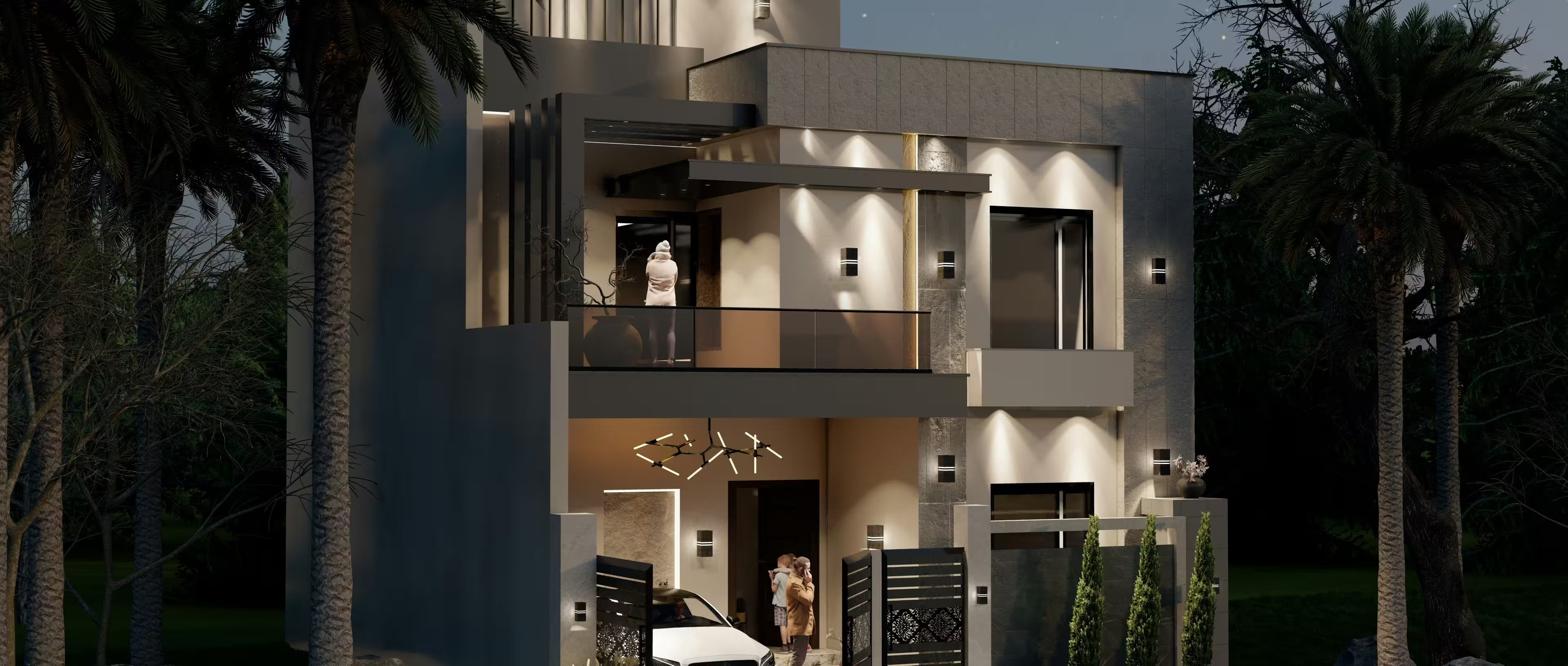
It’s a common assumption: if a home is architect-designed, it must be worth more. While there is some truth to this idea, the relationship between architecture and resale value is not as simple as a guaranteed premium.
What architecture can do — when done well — is position a property more favourably in the market. It can improve how a home is perceived, how it functions, and how it stands apart from comparable listings.
At ISA™, we approach custom home design with a focus on long-term value, not just immediate visual impact. Our ISO 9001, ISO 45001 and ISO 14001 certified systems support consistent design quality, careful documentation and responsible delivery across each project.
Resale value is influenced by a range of factors, many of which extend beyond design alone. Location, land size, market conditions and surrounding development all play significant roles.
However, within comparable properties, design quality can become a key differentiator. When buyers are choosing between similar homes, the one that feels better to live in — and better resolved — often stands out.
Architecture contributes to this perceived value through layout efficiency, spatial quality and overall cohesion.
Buyers form opinions quickly. The way a home presents itself — from street presence to internal flow — can strongly influence perceived value.
Architect-designed homes often benefit from more considered proportions, material selection and spatial sequencing. These qualities can create a stronger emotional response during inspections.
While this does not automatically translate into a specific price outcome, it can increase buyer interest and competitiveness.
Beyond aesthetics, functionality plays a major role in long-term value. Homes that are easy to live in, adaptable to different lifestyles and logically planned tend to appeal to a wider range of buyers.
Architect-designed homes are typically developed with careful consideration of circulation, spatial relationships and daily use patterns.
This can result in homes that feel more intuitive and comfortable, which may influence buyer preference during resale.
Homes that respond well to their site — in terms of orientation, views and topography — often perform better in the market.
Architects design with these factors in mind, positioning buildings to maximise natural advantages and minimise constraints.
This level of site integration can enhance both the experience of the home and its perceived value compared to less site-responsive designs.
The way a home is documented and delivered also affects its long-term condition. Detailed documentation can support clearer construction outcomes and reduce the likelihood of unresolved issues.
Architect-led projects often involve a higher level of design resolution, which can contribute to better alignment between design intent and built result.
Over time, this can influence how well the home ages and how it is perceived during resale.
In competitive property markets, differentiation matters. Architect-designed homes can stand apart from standardised housing due to their individuality and design clarity.
This distinction can attract buyers looking for something unique, particularly in higher-end markets where design becomes a key decision factor.
However, uniqueness must be balanced with broad appeal. Highly specific or unconventional designs may not suit every buyer.
It is important to be clear: architect-designed does not automatically guarantee a higher resale price. Property markets are influenced by many variables beyond design.
What good architecture can do is improve positioning. It can make a home more desirable, more functional and more memorable in the minds of potential buyers.
As registered architects operating under the Architects Act professional conduct obligations, ISA™ avoids making claims about guaranteed financial outcomes. Instead, we focus on delivering well-considered design that supports long-term value.
Homes that retain value over time are often those that balance individuality with practicality. They respond to their site, support everyday living and maintain a level of timelessness in their design.
This approach aligns with ISA™’s design philosophy — creating homes that are not only visually refined but also durable, adaptable and relevant over time.
While resale value cannot be guaranteed, thoughtful design can contribute to a stronger, more resilient outcome in the market.
Not always. Resale value depends on multiple factors including location, market conditions and buyer preferences.
Architecture can improve buyer perception, functionality and differentiation compared to similar properties.
Yes. Well-designed homes often attract more interest due to their layout, appearance and overall usability.
Not necessarily. Designs should balance individuality with broad appeal to suit a wider range of buyers.
Through thoughtful, site-responsive architecture supported by ISO-certified systems and responsible professional practice.
Architect-designed homes do not come with guaranteed financial returns, but they often offer something equally important — a stronger position in the market.
When design is carefully considered, the home feels better, functions better and stands apart. Over time, those qualities can make a meaningful difference in how a property is perceived, lived in and ultimately sold.

Copyright © 2026 ISA™. All Rights Reserved.