When planning childcare projects in Queensland, few topics cause more confusion than how Gross Floor Area (GFA) interacts with outdoor play areas. Developers often assume outdoor space is separate from planning metrics — but depending on how it is designed, covered, and connected, that assumption can be costly.
At ISA™, our ISO 9001, ISO 45001 and ISO 14001 certified systems guide how we document, measure and coordinate area calculations. This ensures compliance, clarity and consistency across design, town planning and construction — without relying on assumptions or informal interpretations.
In Queensland, GFA is generally defined within the relevant Planning Scheme. While definitions vary slightly between councils, GFA typically includes the total floor area of all buildings measured from the outside face of external walls.
The critical word is buildings. Open outdoor play areas do not automatically form part of GFA. However, once those areas become roofed, enclosed, or structurally integrated, they may be captured within the definition.
This is where careful architectural interpretation becomes essential. Misclassifying space can impact yield, setbacks, site cover and car parking calculations.
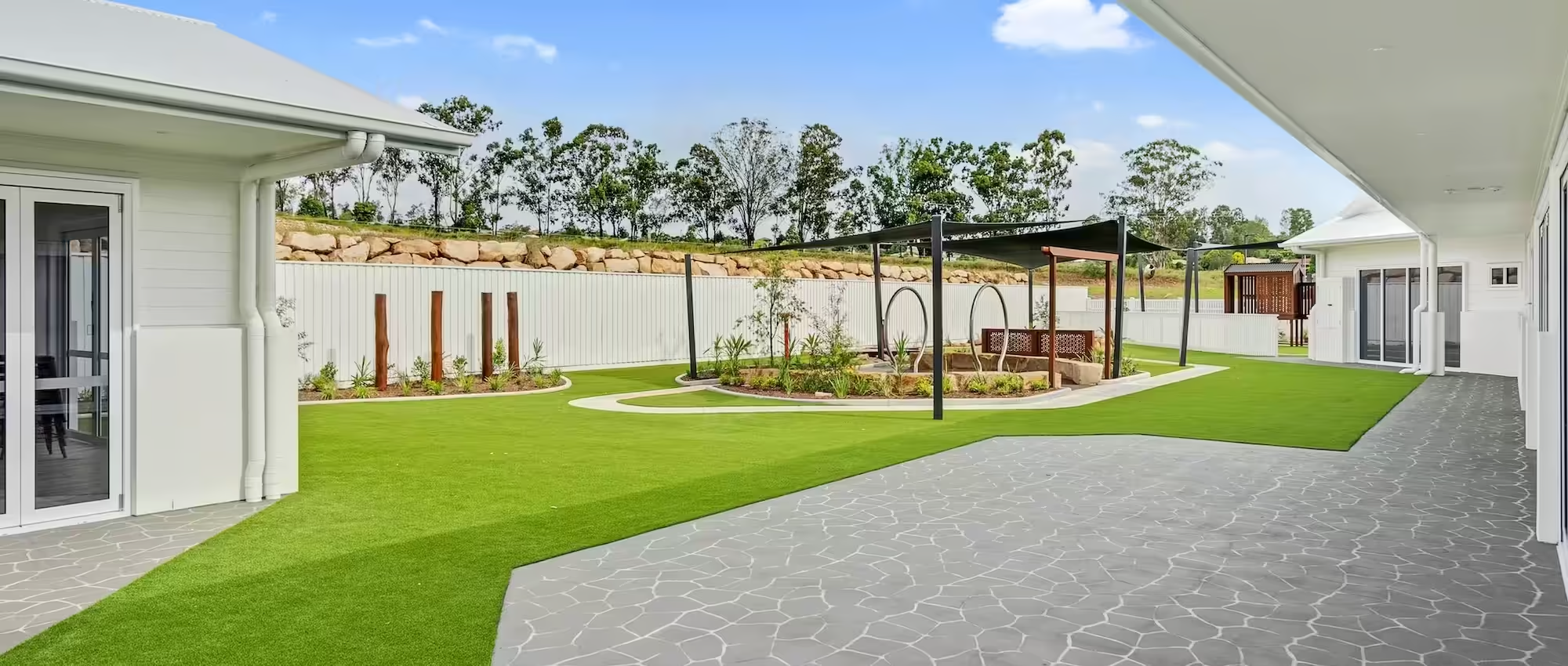
A common scenario in childcare centre design is the inclusion of shade structures. If the outdoor play area is completely open to the sky, it will not be counted as GFA.
However, if a fixed roof is installed — particularly one that is structurally connected to the main building — the area beneath may be interpreted as part of the building envelope.
Freestanding shade sails are often treated differently from roofed verandahs or fully covered extensions. The distinction matters and should be reviewed against the specific Planning Scheme definitions.
Even where a roof exists, the presence of walls influences whether the space forms part of GFA. If the area is substantially enclosed — through walls, glazing, screening or operable panels — it is more likely to be classified as building floor area.
Conversely, open-sided covered areas may fall outside GFA calculations but still count toward site cover. These distinctions affect compliance pathways and development yield.
Importantly, GFA is not the same as the minimum outdoor play space required under the National Quality Framework. Queensland childcare centres must provide minimum unencumbered outdoor space per child.
That outdoor play requirement is measured differently from planning GFA. Confusing the two can lead to either overdesign or non-compliance.
A space may satisfy outdoor play ratios but still impact GFA if it is roofed or enclosed. These parallel compliance streams must be coordinated carefully.
Even when outdoor play areas are excluded from GFA, they may influence site cover calculations. Covered structures, hardstand areas and built elements often contribute to maximum site cover thresholds.
In tight urban sites, this becomes a balancing exercise between achieving enrolment targets, maintaining compliant outdoor play areas and staying within planning controls.
Small misinterpretations in GFA can affect development assessment risk, approval timeframes and design revisions. Adjustments late in the process can trigger redesign, consultant re-coordination and delays.
Through structured QA processes aligned with ISO 9001, ISA™ applies documented area verification at key milestones. This reduces ambiguity and supports transparent communication with planners, certifiers and project teams.
As registered architects, we are also bound by professional conduct obligations under the Architects Act. That means providing accurate representations of building area, avoiding misleading claims and documenting assumptions clearly.
One of the most common errors is assuming that “outdoor” automatically means “excluded.” Roof form, structural connection and enclosure level all matter.
Another mistake is treating early concept sketches as final area confirmations. GFA must be recalculated as the design evolves.
Finally, failing to align architectural drawings with town planning submissions can create inconsistencies that raise red flags during assessment.
Generally, lightweight freestanding shade sails do not form part of GFA, but fixed roof structures connected to the building may. Always confirm against the relevant Planning Scheme.
In many cases, yes — particularly if they are structurally integrated and roofed. The level of enclosure is a key factor.
No. Outdoor play area requirements relate to child capacity under regulatory frameworks, while GFA is a planning metric defined by local councils.
Yes. Inaccurate or inconsistent area reporting can trigger requests for information and redesign during assessment.
At concept, town planning submission and detailed design stages — with documented verification at each milestone.
Calculating GFA for childcare outdoor play areas in Queensland is not simply a drafting exercise. It requires careful interpretation of planning definitions, coordination with regulatory requirements and disciplined documentation.
When managed properly, it protects project feasibility, reduces approval risk and ensures your childcare development proceeds with clarity from concept through to construction.

Copyright © 2026 ISA™. All Rights Reserved.