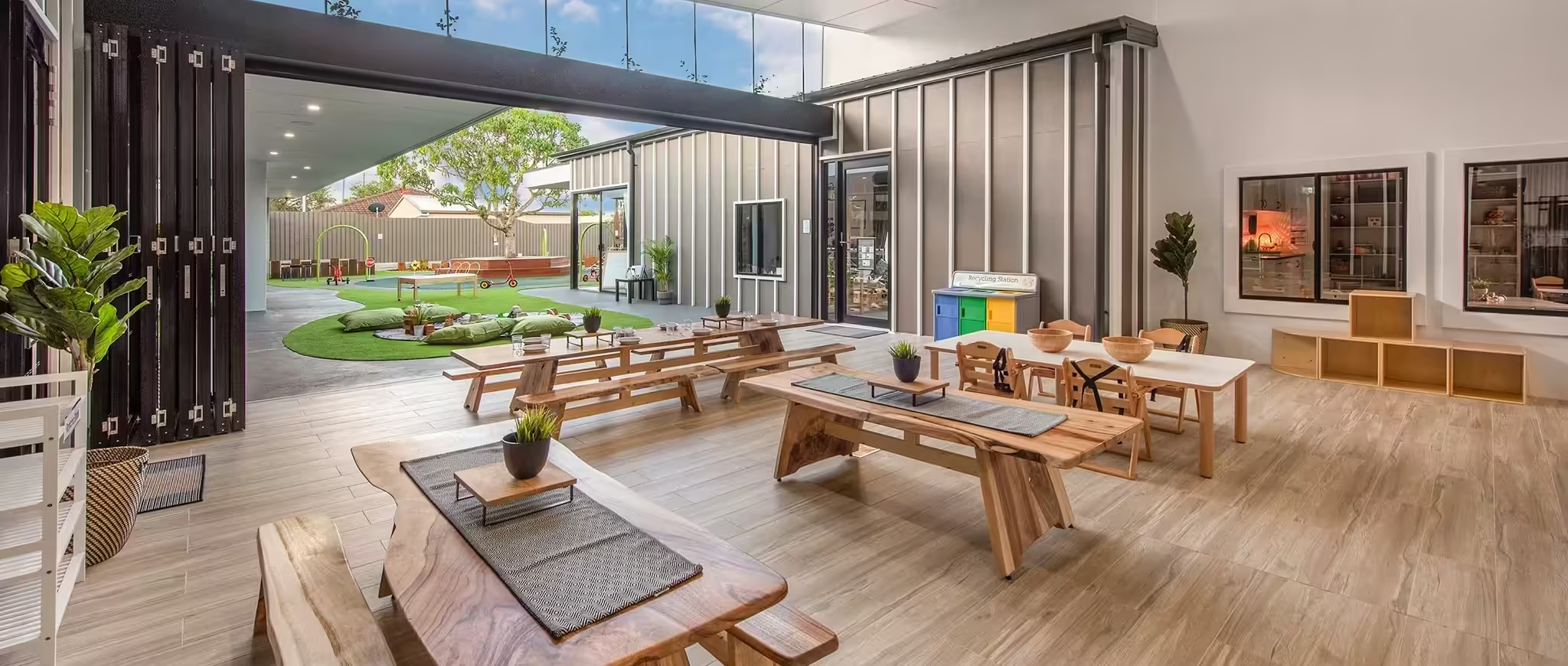
When people think about childcare centre design, they often focus on aesthetics, playground equipment, or building size. In reality, one of the most important factors shaping the success of a centre is its layout. The way spaces are organised directly affects how staff work, how children move through the building, and how smoothly the centre operates day after day.
At ISA™, we approach childcare centre design as an operational system rather than a collection of rooms. Every doorway, corridor and connection between spaces influences daily routines such as drop-off, meal preparation, play transitions and staff supervision.
Childcare centres operate on tightly structured daily schedules. Children move between indoor learning, outdoor play, meals, rest periods and group activities. Educators supervise multiple zones simultaneously while managing transitions throughout the day.
A well-planned layout supports these movements naturally. Rooms connect logically, circulation routes remain clear, and transitions between activities occur smoothly.
Poor layouts, on the other hand, create bottlenecks. Corridors become crowded, staff spend extra time managing movement, and routine tasks take longer than necessary.
The entry sequence of a childcare centre is more than a reception area. It is where parents arrive, children transition into the learning environment and staff manage daily communication.
If the entry area is poorly designed, congestion can occur during peak drop-off and pick-up periods. Parents may struggle to navigate the building, and staff must manage unnecessary crowding.
Thoughtful planning ensures the entry connects clearly to circulation paths while maintaining security and supervision.
Activity rooms form the core of a childcare centre. Their location relative to outdoor areas, circulation paths and shared facilities influences how easily educators can supervise children.
When rooms are positioned with clear visual connections, educators can monitor multiple zones without constant repositioning. This improves both safety and efficiency during busy periods.
Effective childcare centre layouts therefore prioritise visibility between activity rooms, circulation spaces and outdoor play environments.
Outdoor learning environments are central to early childhood education. The relationship between indoor rooms and outdoor play areas determines how easily children can move between these environments.
Direct access from classrooms to outdoor spaces often improves operational flow. Educators can transition groups quickly without relying on central corridors or shared access points.
When outdoor areas are difficult to reach, they may be used less frequently, limiting the flexibility of daily programs.
Childcare design must also consider the needs of educators and support staff. Kitchens, storage rooms, staff facilities and preparation areas should be positioned for easy access without disrupting supervision zones.
When these spaces are poorly located, staff must travel longer distances during routine tasks, increasing fatigue and reducing operational efficiency.
Good architecture quietly supports staff workflows so educators can focus on teaching rather than logistics.
Circulation paths connect every part of the building. In childcare centres, these pathways must accommodate children, educators and parents moving simultaneously.
Wide, clearly defined circulation routes help prevent congestion and improve safety. Direct connections between key areas reduce unnecessary travel distances throughout the day.
Early planning of circulation networks allows designers to balance accessibility, supervision and operational efficiency.
A childcare centre may operate for decades. Over that time, teaching methods evolve, enrolment numbers change and operational strategies adapt.
Flexible layouts allow spaces to adapt without major structural modifications. Rooms can support different age groups, activity types or operational arrangements as needs change.
As registered architects, ISA™ operates under professional conduct obligations defined by the Architects Act. This includes providing accurate documentation, responsible design advice and transparent coordination with consultants and authorities.
While thoughtful layouts can significantly improve operational efficiency, it is important to avoid implying guaranteed performance outcomes. Operational success ultimately depends on both design and management practices.
Layout affects how children move, how educators supervise activities and how efficiently daily routines operate.
One common issue is poor circulation planning, which can create congestion and disrupt daily transitions.
Direct connections often improve supervision and make it easier for educators to transition children between indoor and outdoor activities.
Yes. Inefficient layouts may require staff to travel longer distances or manage more complex supervision arrangements.
Through integrated architectural planning, ISO-certified quality systems and design strategies that prioritise operational functionality.
The success of a childcare centre is not determined by its appearance alone. It is shaped by how the building works during the hundreds of small moments that occur every day.
When layouts are carefully designed, children move freely, educators supervise confidently and operations run smoothly. That is the quiet power of good architecture — shaping environments that support people without them even noticing.

Copyright © 2026 ISA™. All Rights Reserved.