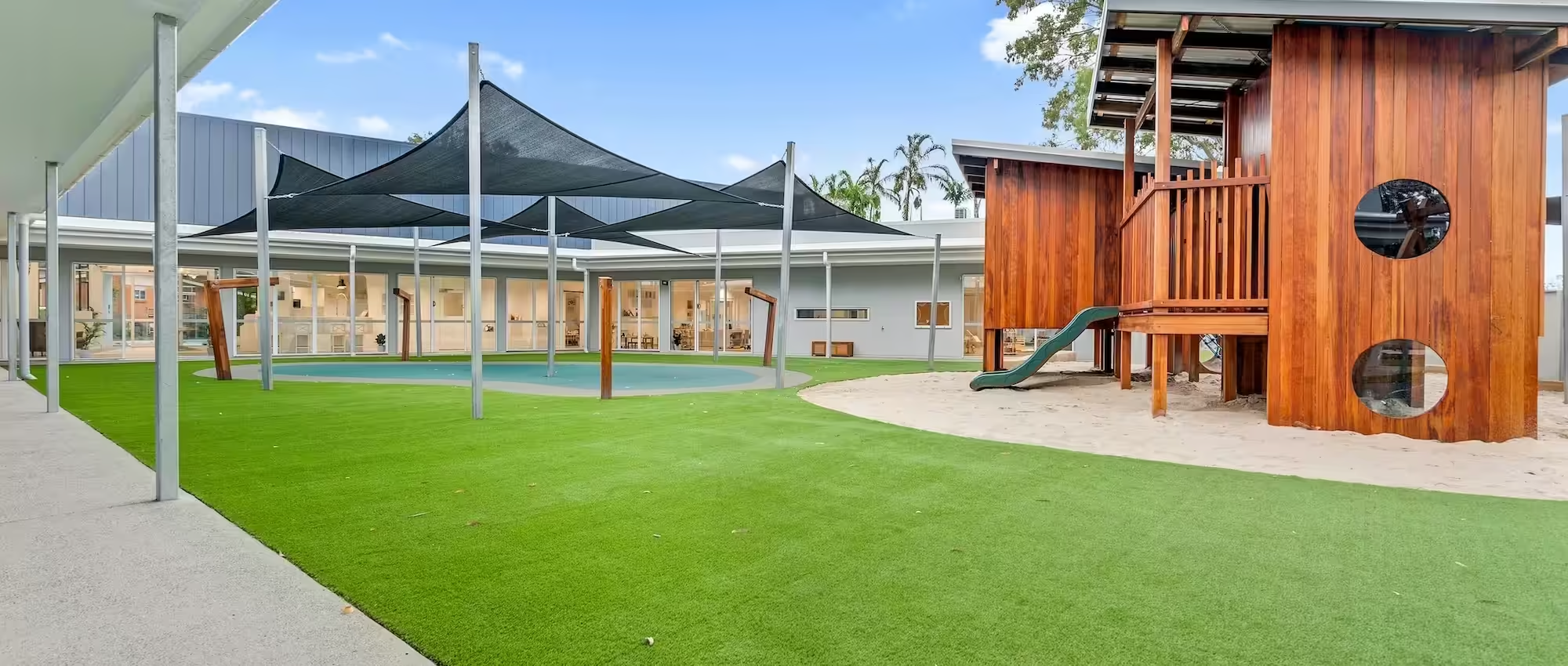
Covered play spaces are one of the most misunderstood components of childcare centre design. Operators often focus on indoor classroom ratios, but outdoor covered learning environments play a critical role in supervision, comfort and long-term operational performance.
At ISA™, we approach childcare design using ISO 9001 quality management systems, ISO 14001 environmental principles and ISO 45001 safety frameworks. This ensures covered play areas are planned with compliance, safety and durability in mind — not just minimum regulatory targets.
The key question is not simply how much covered play space you need, but how that space functions throughout the day.
Covered play space requirements are generally defined through planning schemes, building regulations and early learning frameworks. These spaces provide protection from weather while still allowing children to engage with outdoor-style learning experiences.
Covered play areas must be designed to remain usable, accessible and safe. This means considering structural design, drainage, fall protection, supervision lines and material durability.
Simply providing coverage is not enough. The space must still support real play behaviour, educator supervision and emergency access pathways.
Covered play areas are often linked to child occupancy planning. Larger centres typically require more outdoor learning flexibility to support diverse activities, while smaller centres must maximise usability within tighter footprints.
In practice, this means planning covered areas alongside room layouts, circulation routes and supervision zones. Poorly integrated covered spaces can become underused or operationally inefficient.
At ISA™, we analyse child movement patterns and educator workflows to ensure outdoor areas support daily programming rather than simply meeting numerical requirements.
Functionality matters more than raw area. The most successful childcare centres design covered outdoor spaces that support multiple activities simultaneously.
Clear supervision visibility from indoor learning rooms
Direct and accessible transitions between indoor and outdoor environments
Durable materials that withstand high use
Adequate shading and weather protection
Acoustic control to manage noise levels
These factors directly influence staff workload, child safety outcomes and long-term maintenance performance.
Local planning schemes across Queensland may treat covered outdoor areas differently depending on structure type and enclosure level. For example, fully roofed and enclosed spaces may be treated differently from open-sided shade structures.
Compliance interpretation must be approached carefully. Incorrect assumptions during early feasibility can lead to redesign during town planning assessment, which can affect project timelines.
Early consultation with design and planning consultants helps reduce approval risk and supports clearer development outcomes.
The most effective childcare centres treat covered play spaces as extensions of learning environments rather than separate outdoor shelters.
Integrating covered zones directly off learning rooms
Using structural columns and roof forms to define play zones
Designing flexible spaces that support different age groups
Planning future adaptability for changing operational models
Flexibility is particularly important because childcare operators often adjust programming over time.
Well-designed covered play spaces support long-term asset performance. Durable design reduces maintenance costs, improves operator satisfaction and strengthens leasing appeal for developers.
At ISA™, we design with lifecycle thinking. That means considering weather exposure, corrosion resistance, drainage design and structural maintenance access during early concept stages.
Good architecture is measured by how well it performs years after construction is complete.
Covered play areas should never be treated as late-stage additions. Retrofitting coverage after approval can create compliance and structural complications.
Early planning allows design teams to coordinate structure, services, landscaping and regulatory compliance simultaneously.
While design can reduce risk, it is important to avoid implying absolute performance or cost certainty. Good design provides clarity, not guarantees.
Requirements vary depending on planning schemes, child capacity and site constraints. Design should always be assessed against local regulatory frameworks rather than fixed assumptions.
In many cases, yes. Particularly where structures are roofed and integrated into the building envelope.
As early as possible during feasibility and concept design to avoid later compliance or structural conflicts.
Not necessarily. The quality, usability and operational efficiency of the space matter more than size alone.
Through integrated planning, ISO-certified quality systems, compliance awareness and user-focused architectural design principles.
Covered play spaces are essential components of successful childcare centres. When designed properly, they support learning, supervision and operational efficiency.
At ISA™, we focus on designing childcare environments that work in real life — not just on paper. Because the best centres are not simply compliant. They are functional, resilient and built for long-term success.

Copyright © 2026 ISA™. All Rights Reserved.