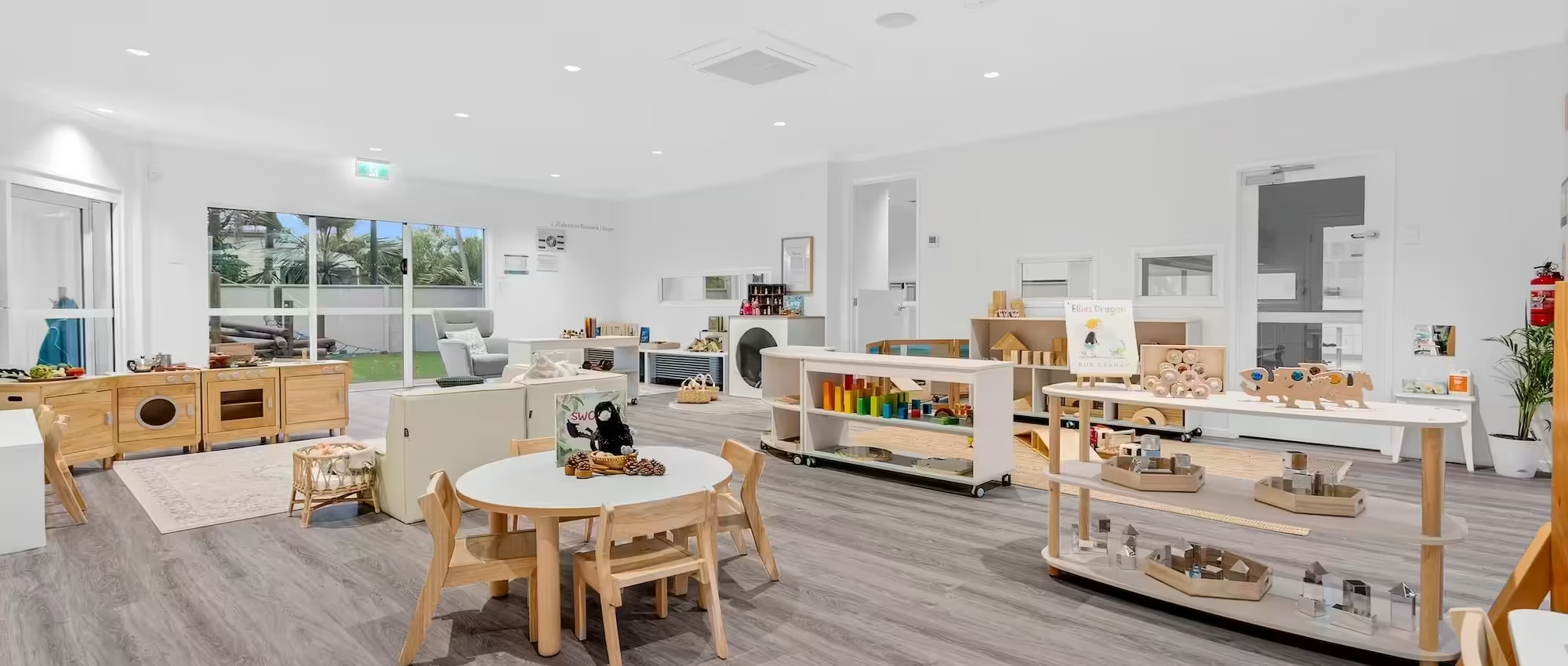
In childcare environments, safety is inseparable from design. Every room, doorway, play area and circulation path influences how effectively educators can supervise children. One of the most important architectural considerations is staff sightlines — the ability for educators to visually monitor multiple activity areas clearly and continuously.
When sightlines are well designed, supervision feels natural and intuitive. When they are poorly designed, staff are forced to constantly reposition themselves, rely on procedural controls, or restrict children’s movement to maintain visibility.
At ISA™, we design childcare centres using ISO 9001, ISO 45001 and ISO 14001 aligned processes. These frameworks support structured coordination between safety considerations, spatial planning and operational workflows from concept through to construction documentation.
Staff sightlines refer to the visual lines of supervision available to educators within a space. In a well-designed childcare environment, staff should be able to oversee multiple activity zones without constantly relocating or physically entering each zone.
Effective sightlines allow educators to monitor children playing, moving between areas and interacting with equipment. This supports safer supervision while reducing stress on staff during busy periods.
Good architectural planning therefore considers not just where rooms are located, but how visibility is maintained between them.
Childcare environments are dynamic spaces. Children move quickly between activities, explore different play zones and interact in ways that require continuous supervision.
When sightlines are clear, educators can respond quickly to developing situations. Potential risks are identified earlier, and children can explore their environment while remaining within visual range.
In contrast, poor visibility often creates hidden corners, obstructed play zones or isolated circulation paths that require additional monitoring.
Beyond safety, sightlines have a direct impact on staff workload. Educators working in spaces with clear visibility can supervise multiple activities simultaneously without constant repositioning.
When visibility is compromised, staff may need to physically move between zones more frequently, interrupting educational activities and increasing fatigue during long shifts.
Well-designed centres therefore support educators by reducing unnecessary movement while maintaining effective supervision coverage.
Activity rooms should be designed to allow educators to see across the full learning environment. Strategic placement of doors, windows and internal partitions can significantly improve visibility.
Furniture placement also plays a role. Storage units, shelving and play equipment should not block key supervision lines between activity zones.
Architectural planning sets the foundation for this visibility, allowing educators to maintain awareness without constant repositioning.
Outdoor play environments present additional challenges for supervision due to landscaping, play equipment and shade structures.
Designing outdoor spaces with clear sightlines helps educators maintain awareness across large play areas. Gradual level changes, strategic planting and thoughtful equipment placement can support visibility while still providing varied play experiences.
Successful childcare centre layouts integrate indoor and outdoor sightlines so educators can supervise transitions between environments.
Blind corners are one of the most common design issues affecting childcare supervision. These occur when walls, corridors or furniture create spaces that cannot be seen from key staff positions.
While small visual obstructions may seem insignificant on drawings, they can become operational challenges once the centre is in daily use.
Identifying and resolving these issues during the design phase helps reduce supervision complexity once the building is operational.
Corridors, entry points and transitions between rooms also influence staff visibility. Poorly designed circulation routes can create isolated spaces that require additional monitoring.
Direct connections between learning rooms and outdoor play areas often improve visibility and simplify supervision compared with centralised corridor systems.
These design decisions should be considered early in concept planning to ensure circulation patterns align with operational needs.
As registered architects operating under the Architects Act, ISA™ approaches childcare design with a focus on responsible professional conduct. Accurate documentation and coordinated drawings help ensure supervision strategies are reflected clearly in construction outcomes.
Our ISO-certified processes support systematic design reviews at key project stages. This allows visibility considerations to be tested and refined before construction begins.
While architecture can significantly improve supervision conditions, it is important to avoid suggesting that design alone guarantees safety outcomes. Operational policies and staff training also play important roles.
Staff sightlines refer to the ability for educators to visually supervise children across activity areas without obstruction.
Clear visibility supports safer supervision and allows educators to monitor multiple activities efficiently.
Yes. Thoughtful spatial planning can improve visibility, reduce blind spots and simplify supervision across indoor and outdoor areas.
Absolutely. Landscaping, equipment placement and shade structures all influence how easily educators can monitor outdoor environments.
Through integrated architectural planning, ISO-certified quality systems and careful coordination between safety, functionality and long-term operational performance.
Staff sightlines are one of the most important yet often overlooked aspects of childcare design. When visibility is clear, educators can supervise confidently and children can explore their environment more freely.
Good architecture quietly supports daily operations. In childcare centres, that support often begins with something simple but powerful — the ability to see clearly across the spaces where children learn and play.

Copyright © 2026 ISA™. All Rights Reserved.