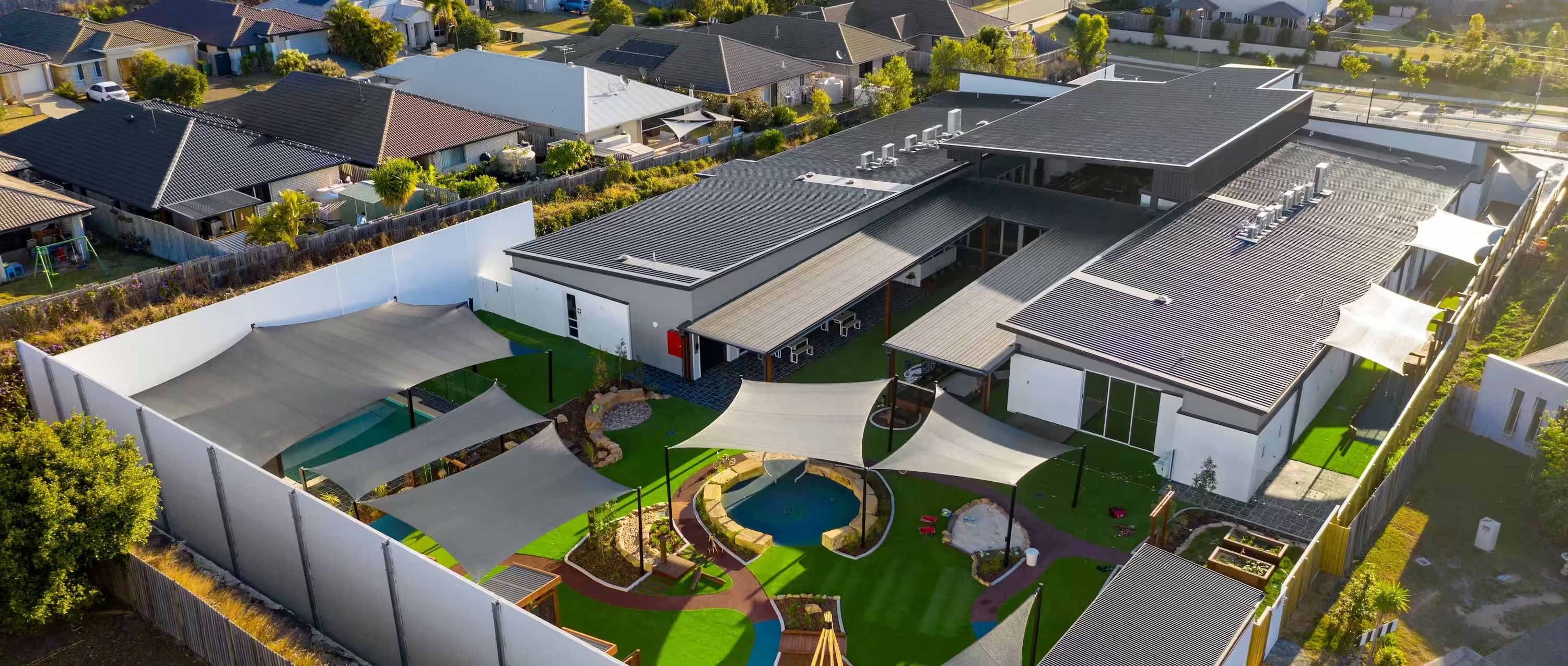
The success of a childcare centre is often determined long before design begins. While operators and developers frequently focus on demographics, traffic counts and land acquisition opportunities, the realities of planning, compliance and operational functionality can dramatically influence whether a site ultimately succeeds.
Some sites appear ideal on paper but become difficult, expensive or inefficient once detailed design and approvals commence. Others may initially seem challenging yet prove highly effective when assessed through the lens of childcare operations and planning requirements.
Demographic analysis is an important starting point, but it is only one component of site selection.
Strong population growth, favourable age distributions and increasing residential development may indicate demand for childcare services, but these factors alone do not guarantee a viable development site.
Planning constraints, access limitations and physical site characteristics can significantly affect whether a centre can be delivered efficiently and operate effectively.
One of the most commonly overlooked aspects of site selection is the planning framework governing the land.
Zoning, overlays, neighbourhood plans, environmental constraints and local planning policies can all influence development outcomes. A site that appears large enough for a childcare centre may face limitations relating to setbacks, landscaping, flooding, heritage considerations or transport requirements.
Understanding these controls early can prevent costly surprises later in the approval process.
Many developers focus primarily on site size when evaluating opportunities.
In reality, site shape often has a greater impact on design efficiency than total square metres.
Irregular boundaries, narrow frontages, easements and constrained building envelopes can reduce flexibility and make it difficult to achieve efficient layouts for buildings, parking areas and outdoor play spaces.
A smaller but well-proportioned site may ultimately perform better than a larger site with significant geometric constraints.
Drop-off and pick-up operations are critical to childcare functionality.
Sites with difficult access arrangements, restricted turning opportunities or limited visibility can create operational challenges that affect both families and staff.
Developers often underestimate the space required for safe vehicle circulation, queuing and parking. These requirements can have a substantial influence on the overall site layout and development capacity.
Outdoor environments are fundamental to childcare design and should never be treated as residual areas after the building footprint has been established.
Successful centres integrate outdoor play spaces into the overall planning strategy from the earliest stages. Factors such as supervision, accessibility, usability, shade provision and indoor-outdoor flow all influence how effective these spaces become.
Sites that struggle to accommodate quality outdoor environments often create operational compromises that persist throughout the life of the centre.
Sloping sites can offer opportunities, but they also introduce complexity.
Significant level changes may affect accessibility, retaining requirements, stormwater management and building design. These factors can influence both approvals and construction methodology.
Early assessment helps determine whether site levels support the intended development strategy.
Childcare centres often operate near busy roads, commercial areas and other activity-generating uses.
External noise sources can affect both indoor learning environments and outdoor play areas. While noise issues can sometimes be managed through design responses, they should be identified during feasibility rather than after site acquisition.
Understanding the surrounding context helps establish whether the site is suitable for long-term childcare operations.
Existing utilities and infrastructure are often overlooked during early site investigations.
Easements, sewer alignments, stormwater infrastructure and service connections can affect building placement, circulation and site planning.
Identifying these constraints early allows them to be incorporated into the feasibility assessment rather than becoming unexpected design challenges later.
The most successful childcare sites are not simply those that achieve approval. They are sites that support efficient daily operations.
Staff circulation, supervision opportunities, deliveries, waste management and parent access all contribute to long-term functionality.
Evaluating a site through an operational lens helps identify opportunities and limitations that may not be apparent during a conventional property assessment.
One of the most effective ways to reduce development risk is to undertake a structured feasibility assessment before purchasing or committing to a site.
Feasibility studies help identify planning constraints, design opportunities, access considerations and operational implications while there is still flexibility to make informed decisions.
This approach allows developers to proceed with greater confidence and clarity regarding the site’s true development potential.
Architects have professional obligations to provide accurate advice, undertake appropriate investigations and consider regulatory requirements when assessing development opportunities.
For childcare projects, this means balancing planning compliance, operational functionality and long-term usability within a coordinated feasibility process.
ISA™ supports these responsibilities through ISO-aligned systems focused on quality assurance, safety and environmentally responsible project delivery.
There is rarely a single factor. Planning controls, access, site configuration and operational functionality must all be considered together.
No. Site shape, access and planning constraints often have a greater influence on development potential than overall site area.
Drop-off and pick-up operations occur daily and significantly affect safety, efficiency and user experience.
Absolutely. Outdoor environments are a fundamental component of childcare design and should be evaluated from the earliest feasibility stages.
Ideally before purchasing or committing to a site so opportunities and constraints can be identified early.
Successful childcare developments begin with informed site selection. While market demand and location remain important, planning constraints, access arrangements, site configuration and operational functionality often determine whether a project ultimately succeeds.
By undertaking a thorough feasibility assessment before committing to a site, developers can make more informed decisions and create stronger foundations for the approval, design and construction phases that follow.

Copyright © 2026 ISA™. All Rights Reserved.