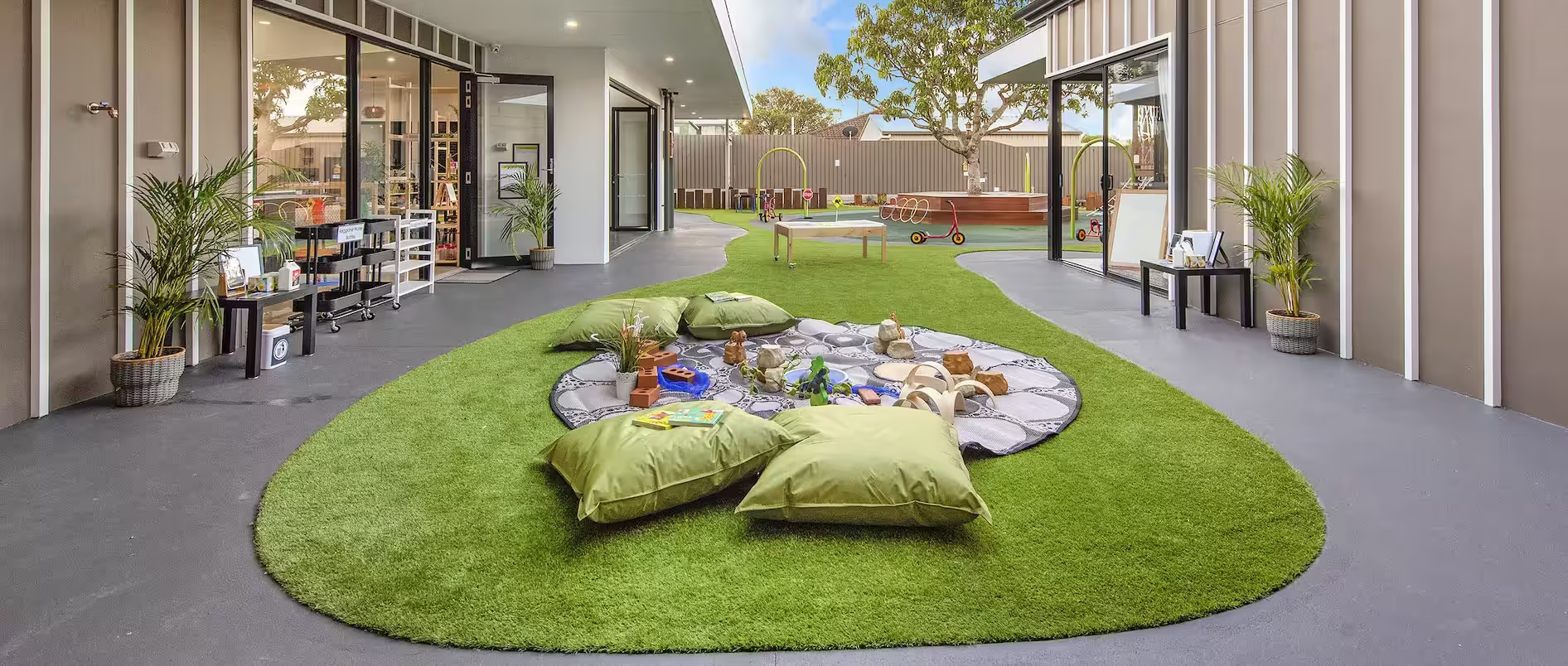
In a typical 90-place childcare centre, hundreds of transitions occur every day. Children move between classrooms and play areas, educators supervise multiple activity zones, and parents arrive during staggered drop-off and pick-up periods.
When indoor-outdoor flow is poorly designed, these everyday transitions become sources of friction. Circulation conflicts emerge, supervision becomes more difficult, and educators spend unnecessary time managing movement instead of focusing on learning and care.
At ISA™, we approach childcare planning through integrated architectural and operational thinking. Our ISO 9001, ISO 14001 and ISO 45001 certified systems guide how layouts are tested, coordinated and documented so indoor and outdoor environments function as a single learning ecosystem.
The 90-place childcare centre has become one of the most common development models across Queensland. It balances operational scale with manageable staffing levels, making it attractive to both operators and developers.
However, this capacity also creates complexity. Multiple age groups must operate simultaneously while maintaining clear supervision lines and safe transitions between indoor and outdoor environments.
Without careful planning, circulation routes can quickly become congested, particularly during peak activity periods or structured play rotations.
One of the clearest indicators of good childcare design is how naturally children move between spaces. Indoor rooms should connect directly to outdoor learning areas without complicated routes or bottlenecks.
When flow works well, children transition between activities smoothly. Educators maintain visibility across multiple zones, and learning programs can shift between environments throughout the day.
In contrast, centres with awkward transitions often rely on procedural workarounds — staggered play times, restricted access points or additional staff supervision — all of which increase operational complexity.
Good indoor-outdoor flow is not just about convenience. It directly affects safety and supervision.
Educators must be able to observe children moving between environments without blind corners or obstructed sightlines. Poorly positioned doors, partitions or landscaping elements can compromise visibility.
Designing for clear supervision zones reduces operational stress and supports compliance with childcare safety expectations.
In well-designed centres, indoor and outdoor learning programs operate fluidly throughout the day. Educators can transition groups outside quickly, adjust activities based on weather conditions and adapt to changing teaching needs.
When flow is poorly planned, outdoor areas become isolated spaces used only at scheduled times rather than integrated parts of the daily program.
Effective flow therefore supports both educational flexibility and operational efficiency.
Ninety children, educators and support staff create significant movement throughout the centre. Doorways, corridors and outdoor access points must be designed to accommodate this circulation without crowding.
Direct outdoor access from activity rooms can significantly reduce congestion compared to single shared exits. This also improves evacuation clarity and simplifies supervision during busy periods.
The most successful childcare environments treat outdoor spaces as extensions of indoor classrooms rather than separate playgrounds.
Architectural transitions such as verandahs, covered play areas and gradual level changes help blur the boundary between environments. This allows children to move naturally between different forms of activity.
When designed properly, outdoor environments feel like continuous learning spaces rather than occasional destinations.
Poor transitions often create wear points in flooring, door hardware and external surfaces. High-traffic thresholds deteriorate quickly when circulation is forced through narrow or awkward routes.
By designing clear and direct movement pathways, architects can help reduce long-term maintenance pressures on operators.
While architecture cannot eliminate all operational costs, thoughtful planning can significantly improve the durability of high-use areas.
Indoor-outdoor relationships must be resolved early in the design process. Retrofitting new openings or adjusting circulation later in a project can be expensive and disruptive.
ISA™ prioritises clear documentation, coordinated planning and responsible design advice throughout each project stage.
Our ISO-certified processes help ensure spatial relationships are tested and verified before construction documentation begins.
It allows children and educators to transition smoothly between environments, improving supervision, programming flexibility and operational efficiency.
Not always, but direct access from activity rooms often improves circulation and reduces congestion in busy centres.
Yes. Clear visibility and simple circulation routes help educators supervise transitions and maintain safe movement across play areas.
Inefficient circulation can increase supervision demands and make daily routines more difficult for educators.
Through integrated planning, ISO-certified quality processes and design strategies that prioritise real operational performance.
Indoor-outdoor flow is one of the defining characteristics of a well-performing childcare centre. When transitions feel effortless, educators can focus on teaching and children can move naturally between activities.
Good architecture does not simply provide space — it shapes how that space is used every day. And in childcare design, the relationship between indoors and outdoors is where that difference becomes most visible.

Copyright © 2026 ISA™. All Rights Reserved.