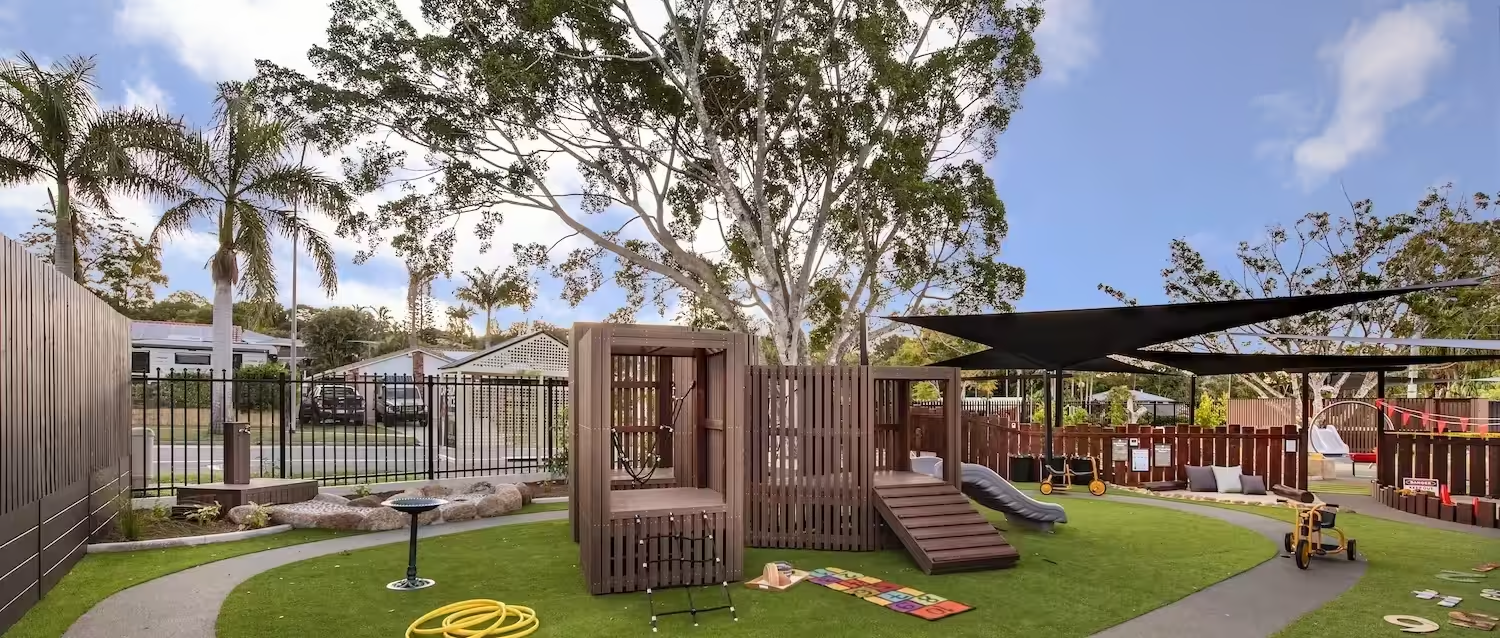
Natural shade is a fundamental part of successful childcare centre design in Queensland’s climate. With high UV exposure and seasonal heat variation, outdoor learning environments must balance safety, compliance, and usability.
At ISA™, we apply ISO 9001 quality management principles, ISO 14001 environmental awareness, and ISO 45001 safety frameworks to ensure shade design is considered early in the architectural process. This supports responsible design outcomes without relying on late-stage additions or reactive solutions.
Natural shade design is not just about protecting children from the sun. It is about creating usable learning environments that remain comfortable, functional, and durable across long operational lifecycles.
Queensland’s climate places unique demands on childcare outdoor environments. High UV levels require careful design responses that support safety while still encouraging outdoor learning and play.
Natural shade solutions are often preferred over purely artificial shading because they help reduce heat build-up, improve comfort, and integrate more naturally with learning landscapes.
From a planning and operational perspective, well-designed shade also supports educator supervision and allows outdoor programs to operate across more hours of the day.
Successful childcare centres rarely rely on a single shade strategy. Instead, they layer multiple approaches to create adaptable outdoor learning environments.
Tree canopy planting that matures over time
Verandah-style building extensions
Landscape-integrated shade structures
Pergola-style architectural shading
Strategic building orientation to reduce direct sun exposure
Each method performs differently depending on site size, child capacity, and long-term maintenance considerations.
One of the most common mistakes in childcare design is treating shade as a fixed feature rather than a long-term landscape and architectural strategy.
Young trees may not provide immediate shade, but they can form part of a long-term environmental strategy that improves site value and usability over time.
At ISA™, we often design shade strategies that balance immediate usability with future canopy development, ensuring centres remain functional as landscaping matures.
This long-term thinking supports sustainable asset management and aligns with responsible environmental design principles.
Childcare outdoor areas must meet regulatory requirements relating to child safety, supervision, and environmental exposure. However, compliance should be considered the baseline rather than the design goal.
Planning schemes may also influence how shade structures are permitted, particularly where they impact site cover, setbacks, or building height limits.
Early coordination with town planners, certifiers, and design teams helps reduce approval risk and supports smoother project delivery pathways.
Natural shade must also support staff visibility and operational workflows. Poorly positioned shade can create blind spots or obstruct circulation routes.
The best childcare centres design shade alongside circulation planning. This allows educators to supervise play areas without compromising comfort or safety.
Strategic shade placement can also reduce glare, improve acoustic comfort, and support quieter learning zones within outdoor environments.
Natural shade design must also consider material performance in harsh environmental conditions. High UV exposure can degrade materials quickly if they are not selected carefully.
Durable construction detailing, corrosion-resistant fixings, and weather-appropriate landscaping choices help reduce long-term maintenance demands.
While good design can reduce operational risk, it is important not to promise cost certainty or long-term performance guarantees. Instead, design should focus on resilience and adaptability.
Outdoor learning environments should feel like extensions of indoor classrooms rather than separate spaces.
Natural shade can help define outdoor learning zones, quiet reading spaces, and active play areas without relying on hard physical barriers.
This supports more flexible programming and allows childcare educators to adapt activities throughout the day.
Childcare centres change over time. Enrolment numbers fluctuate, teaching methods evolve, and operational models adapt to community needs.
Future-proof design allows shade strategies to scale with demand without requiring major structural modification.
This approach protects long-term investment value and supports sustainable facility operation.
Both have roles. Natural shade often integrates better environmentally, while artificial shade can provide immediate protection where vegetation has not matured.
Requirements vary by planning scheme and operational licensing standards. Design should always be assessed against local regulations.
As early as possible during concept design to avoid structural or planning conflicts later in the project lifecycle.
Yes. Good shade design improves comfort, supervision, and programming flexibility, which can support smoother daily operations.
Through integrated architectural planning, ISO-certified quality systems, and user-focused design strategies that prioritise real-world performance.
Natural shade is not a decorative feature — it is a fundamental performance component of successful childcare design. When planned properly, it supports children, educators, and operational teams.
At ISA™, we design childcare environments that perform in real-world conditions. Good architecture is not about isolated features, but about how all elements work together over time.

Copyright © 2026 ISA™. All Rights Reserved.