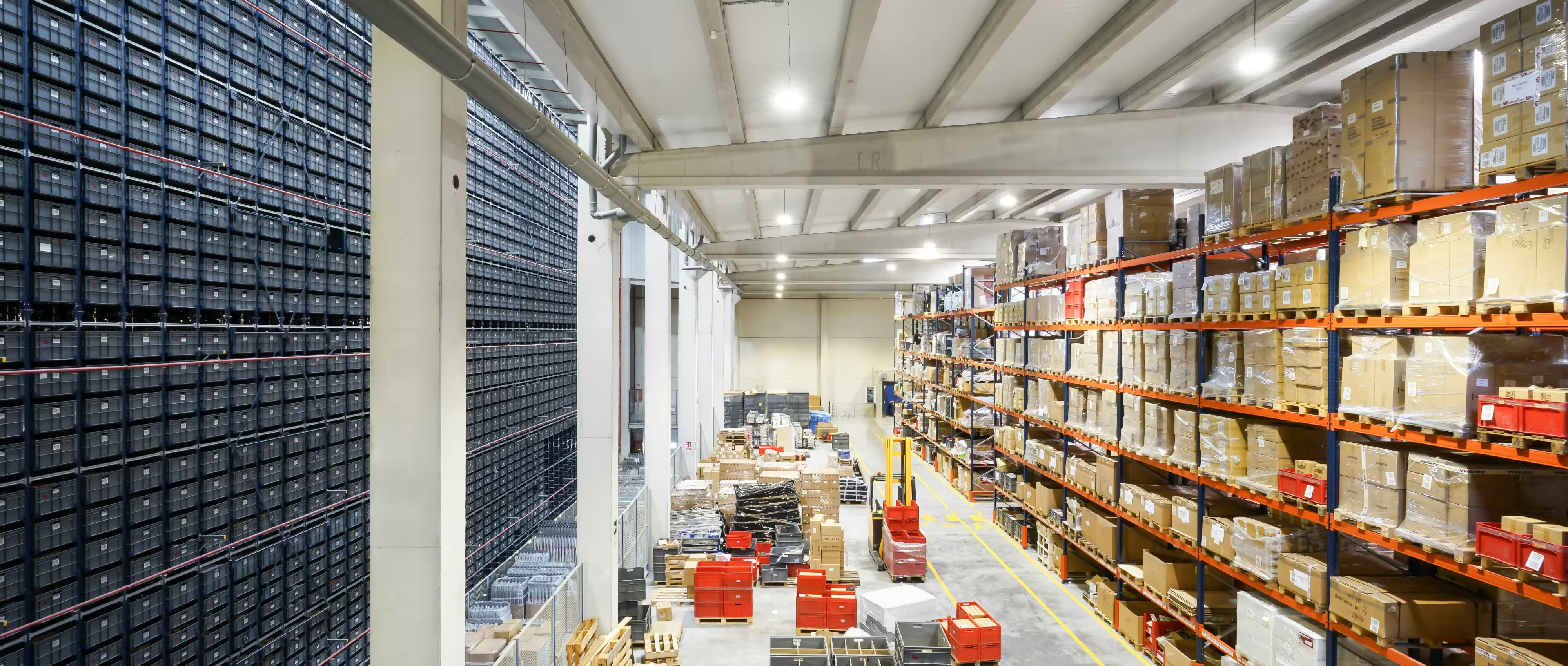
Industrial developments are often viewed as straightforward projects compared to commercial offices, childcare centres or luxury homes. In reality, successful industrial facilities require careful planning, technical coordination and a thorough understanding of how the building will operate long after construction is complete.
At ISA™, our industrial and warehouse projects are delivered through ISO 9001, ISO 45001 and ISO 14001 certified systems, helping ensure quality management, safety integration and environmentally responsible project delivery throughout the entire development process.
One of the most common mistakes in industrial development is focusing on the building before understanding the operational requirements.
The most successful facilities are designed around the way the business functions. Storage requirements, vehicle movements, loading operations, staffing levels, equipment needs and future expansion plans should all inform the design process.
When operations drive the design, the building becomes a tool that supports efficiency rather than a constraint that limits it.
Site selection is often the most important decision in the entire project.
Site dimensions, shape, access arrangements, topography and surrounding land uses can all influence the layout and functionality of the development.
A site that appears attractive due to price or location may contain hidden constraints that affect truck movements, building placement or future expansion opportunities.
Early feasibility investigations help identify these considerations before commitments are made.
Industrial developments are subject to planning requirements that can affect building size, setbacks, landscaping, access arrangements and operational activities.
Zoning alone does not guarantee a straightforward approval pathway. Overlays, infrastructure requirements and local planning provisions may all influence the development outcome.
Understanding the planning framework early helps establish realistic expectations and reduces approval risks later in the project.
Few aspects of industrial design are as important as vehicle circulation.
Trucks, delivery vehicles, service vehicles, forklifts and staff traffic all require safe and efficient movement throughout the site.
Poor circulation planning can create operational bottlenecks, safety concerns and reduced site efficiency that persist throughout the life of the facility.
Successful industrial design integrates circulation planning from the earliest stages of development.
Industrial facilities often evolve as businesses grow and operational requirements change.
A well-planned building layout provides flexibility for future tenancy changes, equipment upgrades, storage reconfiguration and expansion opportunities.
Designing exclusively for today’s needs can limit future adaptability and reduce long-term value.
Industrial buildings rely on significant infrastructure and servicing requirements.
Power supply, hydraulics, stormwater management, communications infrastructure and fire systems all influence building design and site planning.
Early consultant involvement helps ensure these requirements are properly integrated into the project rather than becoming obstacles later.
Sloping sites can create opportunities but also introduce additional complexity.
Retaining structures, accessibility requirements, drainage design and earthworks may all influence development outcomes.
Understanding site levels during feasibility allows these factors to be considered as part of the overall development strategy.
Industrial projects involve multiple consultants, contractors and approval authorities.
Clear and coordinated documentation helps ensure all parties are working from consistent information throughout the project lifecycle.
Incomplete or poorly coordinated documentation can create pricing inconsistencies, construction delays and operational compromises.
Many important project decisions continue during construction.
Existing conditions, contractor queries and coordination issues often require design input as work progresses.
Continued architect involvement helps maintain alignment between the approved design and the final built outcome.
Architects contribute more than building layouts and drawings.
Early involvement helps identify planning constraints, site opportunities, operational considerations and consultant requirements before major commitments are made.
This integrated approach supports better decision-making throughout feasibility, approvals, design and construction.
Architects operate under professional obligations requiring accurate advice, responsible documentation and compliance with legislative requirements.
For industrial projects, these responsibilities help balance operational functionality, compliance and long-term usability throughout the design process.
ISA™ reinforces these obligations through ISO-aligned systems focused on quality assurance, safety and coordinated project delivery.
Site constraints, operational requirements, planning controls, vehicle access and future expansion opportunities should all be assessed early.
Site characteristics directly influence building layout, vehicle circulation, servicing requirements and development potential.
Many industrial projects require planning and building approvals depending on the proposed use, location and scope of development.
Efficient movement of trucks, service vehicles and staff is critical to operational performance, safety and long-term functionality.
Ideally during site selection or feasibility so opportunities and constraints can be identified before major commitments are made.
Industrial building design in Queensland involves much more than creating warehouse floor area. Site selection, operational planning, vehicle circulation, consultant coordination and regulatory requirements all influence the success of the final outcome.
By approaching industrial developments strategically and engaging the right design team early, businesses and developers can create facilities that support efficiency, adaptability and long-term operational success.
Copyright © 2026 ISA™. All Rights Reserved.